

2026 Data Science Careers: Why You are Missing Out on Your First Job
Discover why freshers struggle to get hired in data science in 2026, and learn in-demand skills, tools, and smart career tips to stand out.
Have you acquired many technical skills but can’t manage to get your first job? You are not by yourself. There are thousands of new graduates competing for job openings from data analyst to machine learning engineer roles every year, and it can be tough. There are many qualified candidates but still barriers to hiring. According to industry reports, data-related jobs are expected to grow by 30–35% over the next decade; jobs in data science and analytics will continue to increase in upcoming years, but hiring will be limited to those with the right skills, portfolio, and preparation.
In this blog, you will learn why hiring has become difficult, what companies expect, and how beginners can change their strategy to succeed in data science careers. We will also cover essential skills, tools, resume tips, interview preparation ideas, and career development insights to help you step confidently into the hiring process.
The Current Data Science Job Landscape in 2026
In 2026, data science jobs continue to be very popular. Because of the higher demand for data science jobs, getting hired is quite challenging, and the world is getting more about data every day. Even with that, it is really tough for new people to get a job.
The reason is that there are just too many people looking for data jobs. When a company posts a data job, they get hundreds of people applying for it. This means the people doing the hiring can pick and choose who they want. They want someone who knows about data and has actually worked with it before. They also want someone who can explain things in a way. Companies are looking for data people who have knowledge and real-world experience and clear communication skills. Data jobs are hard to get because of this.
Data science is the most wanted profession, as firms prioritize experienced data scientists. Companies still expect candidates to have data science experience, as they want to hire data scientists.
When you are looking for a job, it is not about what you know, like Python or SQL or machine learning. You have to be able to show people how you use Python and SQL and machine learning to get things done. This is what really matters. You need to be able to say how you used Python to solve a problem or how you used SQL to make something better. Just knowing Python is not enough. You have to be able to show how it helps you to make a difference.
Why Resumes Really Matter
Many recent graduates feel that their resumes are being disregarded due to the format that they choose to use. Resumes that list every buzzword without real context such a resume may be rejected and the applicant ignored.
Companies hiring recent graduates want to see clarity, concentration, and proof of outcomes. Describing training, internships, projects, and tangible results is more important than filling the resume with lengthy paragraphs.
Tip: First, list the relevant skills, like Python for data analytics, SQL for queries, predictive modeling and dashboards, and visualization.
Most resumes are given a quick review, usually 10 seconds. If the resume does not show value right away, it will be skipped. What recruiters want to know is what you accomplished, not just what courses you studied.
Example: How to Build a Good Data Science Resume
A strong resume should include a few things, which are mentioned below:
- Clear summary (2-3 lines about your skills and goals)
- Technical skills section (Python, SQL, Power BI, machine learning, etc.)
- Project section with results (name of the project, which tools you used for that project, etc.)
- Internships or practical training
Weak example of a bad resume:
Learned Python, SQL, and machine learning.
Strong example of a good resume:
Built a customer churn model using Python and achieved 82% accuracy using logistic regression
This kind of thing in a resume shows impact, not just learning.
Key Skills and Tools Employers Look For
In order to succeed in your data science job search, you will need to learn the technical skills and tools needed in the industry. You cannot just learn the theory because employers want to see how you apply your skills to solve problems. Employers expect a mix of technical and thinking skills. Knowing tools alone is not enough.
Core Skills Required
- Statistics: mean, probability, hypothesis testing
- Programming: Python or R for analysis
- Databases: SQL for real data queries
- Visualization: Power BI, Tableau, Matplotlib
- Machine Learning: regression, classification, model evaluation
- Business thinking: understanding why data matters
Most real projects use all these skills together, not separately.
Core Technical Skills Explained
Here are some important essential concepts you should be perfect in:
- Statistics and Mathematics: Understanding distributions, probability, hypothesis testing, and basic linear algebra is the foundation for any data analysis or machine learning task.
- Programming Languages: Python or R for data manipulation, modeling, and automation. Python libraries like pandas, NumPy, scikit-learn, TensorFlow, and PyTorch are industry standards.
- Database Skills: SQL is used daily to retrieve and manipulate data in real situations. Real-world job tasks often involve writing complex queries to answer business questions.
- Visualization Tools: Tools like Power BI, Tableau, and Matplotlib/Seaborn help communicate results visually, which is essential when dealing with stakeholders.
- Machine Learning Basics: Fundamentals like regression, classification, clustering, model evaluation, and feature engineering help you build predictive models and interpret results.
Many freshers strengthen these skills by enrolling in specialized programs like data science training or extended preparation through any course in Hyderabad related to data science topics where these tools are taught with practical examples.
Why You Still Might Not Be Getting Interviews
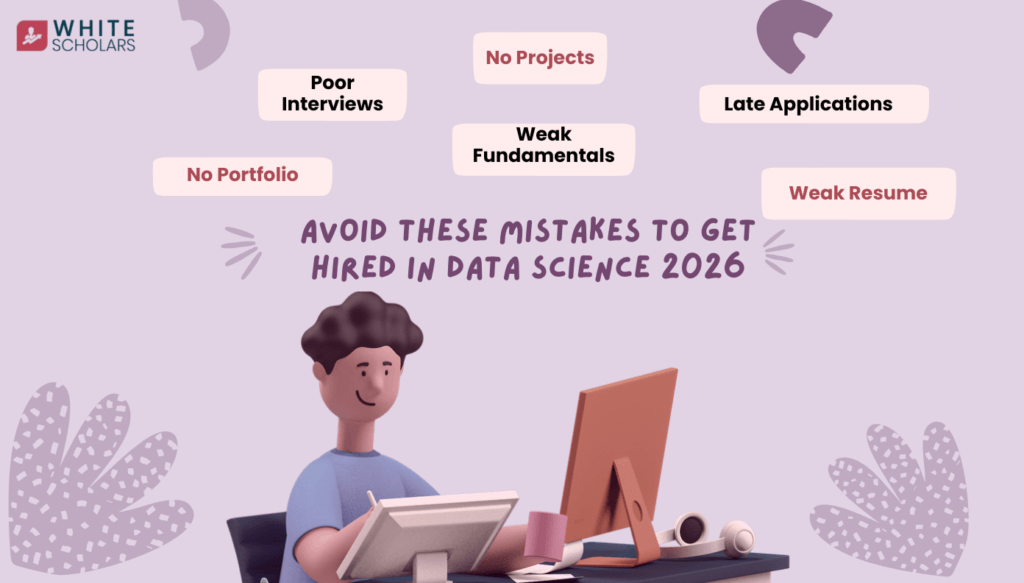
Even with the right technical skills, many candidates miss out on interviews because they don’t prepare thoroughly, have a skill mismatch or poor presentation, or align with what employers want in real hiring scenarios. Because of such errors, some people will not get interview calls either.
Other common reasons also include:
- Resume not matching job description
- No real projects shown
- Applying without understanding the role
- Weak LinkedIn profile
Example Interview Screening Questions
Recruiters often check basics first:
- Explain a project where you used data to solve a problem
- How did you clean messy data?
- Why did you choose this model?
If answers are unclear, candidates are rejected early, so we should explain the above-mentioned things very clearly.
Interview Preparation and Value-Driven Answers
Every time you step into an interview, let what you say reveal why it matters. Not one firm cares about memorized textbook definitions; they’re watching how your mind works when faced with actual problems. Practice explaining your thought process, portfolio projects, and how your solutions helped answer business problems.
Tip: Start by looking into the business ahead of every meeting. Get clear on what the job asks for and understand the role’s requirements. Match your responses to fit naturally for that particular job role, so it feels like you belong there.
What matters most isn’t your memory; it’s the way your mind works. Companies listen closely to how you work through a problem, not just the answer. Your method speaks louder than memorized answers ever could.
How to Answer Better
- Explain your process step by step
- Talk about challenges you faced
- Share why your solution mattered
Example:
Instead of saying “I used Python,” say
“I used Python to analyze sales data and found low performance in one region, which helped improve targeting.”
This shows that you have practical knowledge about the tools.
Build a Portfolio That Gets Attention
A strong project portfolio can make a huge difference between getting hired and being overlooked. Your portfolio is proof of the real work you have done, and it’s what employers review before they decide to call you for a job.
A portfolio proves your skills better than certificates. It shows how you work with real data.
How to Build a Strong Portfolio (Example)
Make sure each of your projects includes:
- A clear problem statement
- Data cleaning and analysis steps
- Visualizations that tell a clear story
- Modeling or prediction results
- A link to your code platforms (like GitHub)
- Explanation of business impact or results
Platforms like GitHub, Kaggle, and portfolio websites help you showcase your work professionally. Many training programs, including data science training in Hyderabad, focus on project-based learning and help you create a compelling portfolio that recruiters respect.
Example Project:
“Customer attrition analysis using telecom data to predict users are likely to leave and suggest retention strategies.”
Upload projects on GitHub with a clear explanation. One strong project is better than five weak ones. So choose projects very carefully.
Common Mistakes That Keep Freshers Unhired
It’s not just lack of skills; it’s about strategy and mindset. Freshers often fall into traps that reduce their chances of landing a job.
Bonus Tips and Mistakes to Avoid
Here are some blindfolds to watch out for:
- Relying only on certificates: Certificates are also necessary, but employers care more about actual skills.
- Ignoring soft skills: Communication, problem solving, and stakeholder interaction are now part of everyday data work.
- Not applying consistently: Waiting to be “perfect” only slows you down. Keep applying for jobs while you continue learning and improving your skills.
- Lack of networking: Connect with professionals, join data communities, and participate in forums. Many jobs come from connections, so networking is also very important.
Conclusion
Getting into data science by 2026 might feel tough and challenging, but still, good planning makes it possible to achieve the job. Rather than rushing it, build core skills slowly; after that, apply them with real projects. Share your work clearly; leave out complex terms or exaggerated talk. Whether you start with a small data analytics course or more advanced training like data science training in some places like Hyderabad, Mumbai, Bangalore, etc., in the end, does anything matter more than constant progress and consistent learning?
Quiet consistency matters more than loud promises. Turning up each day, being prepared and clear about what you bring, and real improvement does not come from big actions done once in a while. It comes from small, regular efforts done every day. When you repeat a habit again and again, it slowly builds skill, confidence, and strength. Consistency matters more than dramatic effort.
FAQs
1. Is data science still a good career in 2026?
Yes, data science continues to grow as businesses depend more on data-driven strategies. While competition is high, demand remains strong for skilled data science professionals who can analyze data and provide insights.
2. What should freshers focus on first?
Pick up the basics first – Python, SQL, and stats, then move into showing how charts tell stories. Work on full projects, start to finish, so it’s clear after some time, you can start working with information and perfect yourself with good communication skills.
3. Do I need a degree to get hired?
Not necessarily. Some companies care more about what you can do than where you studied. Hands-on ability, plus real work examples, often matters most. Programs such as data science training in Hyderabad, Mumbai, Bangalore, etc., at these institutions guide learners through building actual projects that hiring employers respect
4. What steps help make a resume stronger for data science roles?
What you achieved matters most. Show numbers where learning led to real change, highlight the projects, and explain actual work done, not just tasks listed. A clean layout helps it breathe and keeps eyes moving down. Match each part of your story to what the role actually asks for.
5. What tools are most important for beginners?
Python usually comes first, then pandas and NumPy tag along for moving data around. Instead of those, sometimes it’s just SQL doing the main tasks when sorting through records. When pictures are needed to show what the numbers mean, Power BI tends to be helpful, and Tableau does too. If a task involves teaching machines simple tricks, scikit-learn slips into the mix without much fanfare.
6. How long does it take to get hired?
It depends, but with dedicated learning and practical projects, many freshers achieve job readiness in 4-12 months, depending on intensity and prior experience.