

The Role of Data Analytics in Customer Experience Improvement
Improve customer experience with data analytics. Learn how data-driven insights personalize journeys, predict customer needs, and boost loyalty and growth.
Introduction
Have you ever wondered why some brands understand their customers so well? Why do some brands offer exactly what you need at exactly the right time?
The answer is simple: with the help of data analytics, it’s possible.
In today’s world, more than 65% of businesses rate customer experience as a top growth priority. Meanwhile, companies that use data-driven decisions enjoy customer satisfaction rates that are 20-30% higher.
Customer expectations are increasing year after year. Customers are expecting faster responses, more personalized offers, smooth website experiences, and quicker resolutions. Guesswork is no longer an option. Business decisions need to be backed by insights.
In this blog, we will cover:
- How Data Analytics helps in Customer Experience
- How marketers, founders, and product teams use Data Analytics
- What are the tools and skills required
- Why joining a Data Analytics course in Hyderabad is a great way to build a strong career
Whether you are a Digital Marketer, an MBA graduate, a founder of a startup, or a fresh graduate looking to join a data analyst course? Then this blog is for you.
How Data Analytics Helps Understand Customer Behavior
Customer experience starts with understanding customer behavior. Every click, search query, purchase, complaint, and review is a source of valuable information.
With the help of data analytics, patterns are established:
- What customers are buying
- When customers are buying
- Why customers are leaving
- Which marketing campaigns convert better
- What customers complain about the most
For marketing professionals and performance marketers, this means marketing campaigns can be improved with real data rather than assumptions.
For CRM experts, the stages of the customer lifecycle can be tracked with precision. Emails, offers, and follow-ups can be customized.
For startup founders in Hyderabad and other cities, this is how they ensure they develop products that customers want.
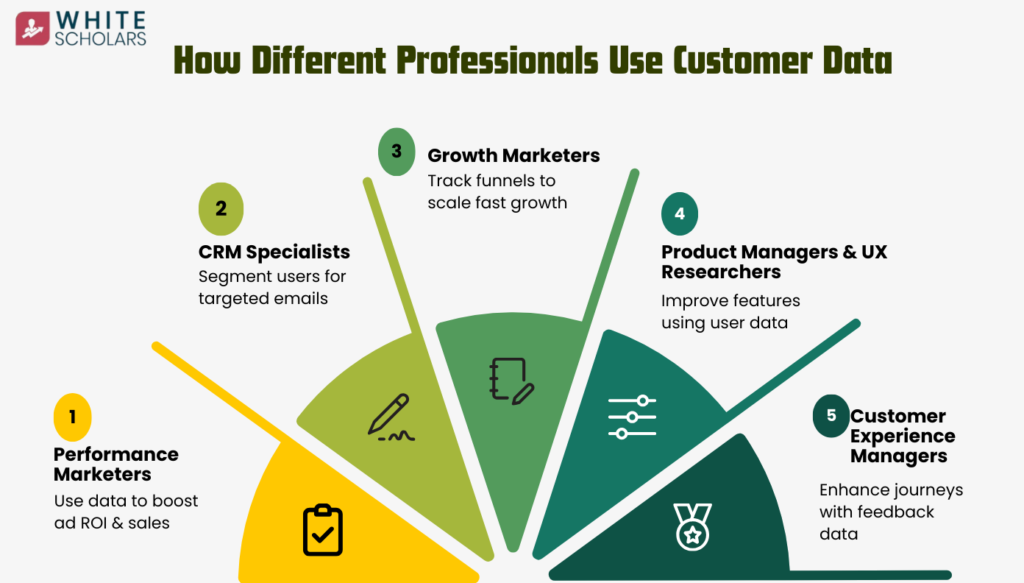
How Different Professionals Use Customer Data
Let’s break it down clearly:
Performance Marketers
Conversion rates and cost per acquisition are monitored. Data helps in understanding which ads are giving the maximum ROI.
CRM Specialists
Segmentation of customers is done based on behavioral and purchase history. Customer retention strategies are developed using churn prediction models.
Growth Marketers
A/B test results are analyzed. Drop-off points in the customer funnel are analyzed to improve customer acquisition and retention.
Product Managers & UX Researchers
User journey maps are created using customer usage patterns. Customer pain points are analyzed to improve product and service design.
Customer Experience Managers
Support tickets, customer reviews, and customer feedback are analyzed to improve customer service quality.
Marketing Professionals & Digital Marketers
Website traffic, bounce rates, ad performance, and engagement metrics are examined. Budget allocation for campaigns is done based on performance metrics. Operational data and service quality metrics are analyzed to improve customer satisfaction levels.
Customer Experience and Data Analytics Are Essential for Understanding Customer Needs Throughout Complex Journeys
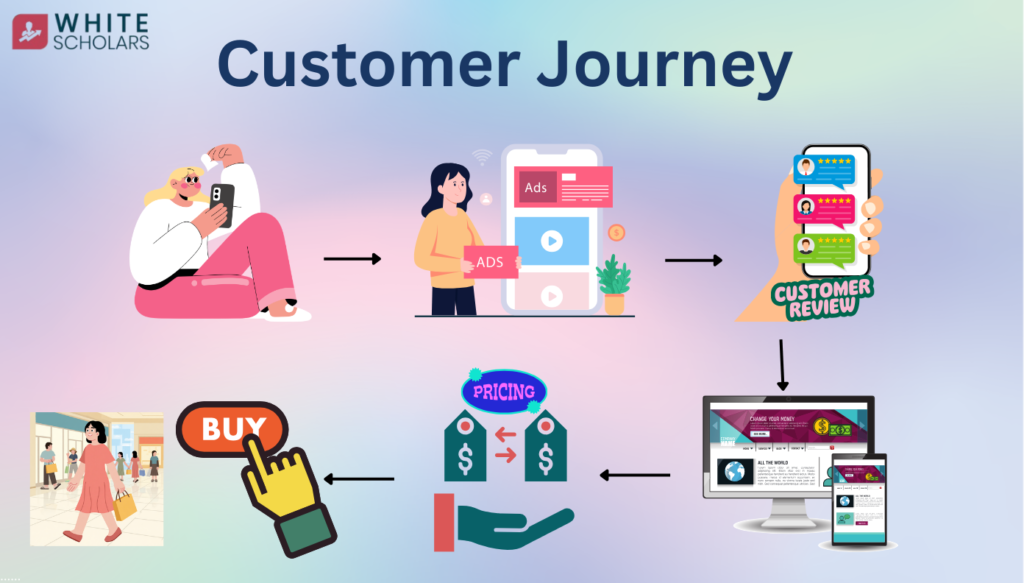
The customer today does not take a straightforward path. He or she may look at an ad on Instagram, read product reviews on Google, visit a website, look at prices on another website, and finally buy the product. This whole process is referred to as the customer journey. This process is long and complicated.
The customer journey is analyzed using data analytics. Data analytics helps a business understand each step that the customer takes. For example, it helps understand where the customer is comfortable and where he or she becomes confused. By using this approach, a business understands the real needs of the customer rather than making guesses. If a business understands the customer at each step, it can improve the customer experience, reduce drop-offs, and gain trust.
Without using data analytics, we make guesses. By using data analytics, we make decisions based on facts.
Customer-Centric Data Analytics Helps Brands Prioritize and Act on Issues Based on Revenue Impact
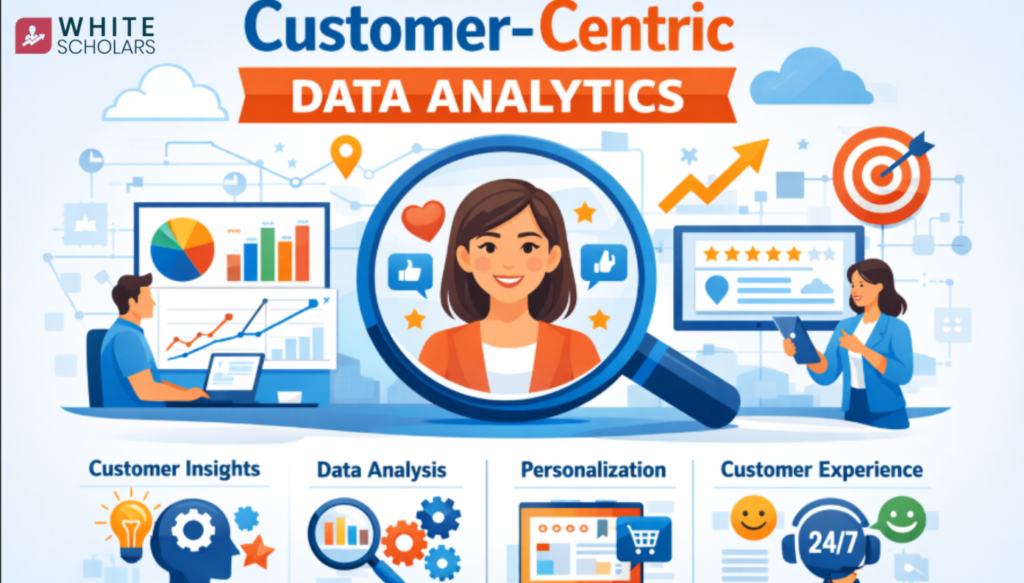
Not all customer problems carry the same level of importance. For example, some may cause minor inconvenience, while others may impact sales and profits.
Customer-centric data analytics helps brands understand which customer problems cost them money. For example, if data indicates that 40% of customers abandon their cart because of high shipping costs, it becomes a priority to fix that problem because it affects their revenues.
This approach helps businesses focus on the efforts that make their customers happy while improving their business performance. Instead of trying to fix all customer problems, businesses use data to determine which one to prioritize.
This approach helps make strategies more profitable.
How AI & ML Change Customer Experience and Data Analytics
Customer experience has been revolutionized by Artificial Intelligence (AI) and Machine Learning (ML).
Traditionally, businesses relied on reports to analyze historical trends. However, AI can forecast what the customer might do next.
For example:
- Product recommendations based on previous purchases
- Sending offers to the customer
- Predicting churn before they leave
- Automating chatbots’ responses
Machine learning algorithms improve by learning continuously from the data fed to them. Therefore, the customer experience becomes more personalized.
It is not just the analysis of historical trends that AI can perform. It can help businesses prepare for the future.
Customer Insights and Data Analytics Set the Stage for Success
Customer insights represent the in-depth understanding of customers derived through analyzing customer behavior, customer feedback, customer preferences, and customer patterns.
Data analytics helps in turning raw data into an interesting narrative. For instance:
- What products do customers love the most?
- What time of day do customers use our product?
- What feature of our product puzzles customers?
When customer insights are clear, teams like marketing, product, and customer support can collaborate better. Product managers can improve products. Marketers can improve campaigns. Support teams can resolve issues faster.
Insights allows teams to align better. And when teams align better, business growth becomes smoother.
Personalization: The Heart of Modern Customer Experience
Customers are no longer interested in generic communication. Customers are interested in personalized communication.
Data analytics helps to facilitate this.
For example:
- Recommendations are made to customers based on their online surfing
- Recommendations are made to customers based on their online viewing
- Recommendations are made to customers based on their spending
The more a business is able to offer personalization, the more customer loyalty is improved.
Business owners and startup owners can also benefit from this because, for them, retaining customers is always more cost-effective than gaining new customers.
In Hyderabad, there are many business hubs that are emerging, and startups are investing in training students in data analytics to gain a competitive edge.
Tools Used to Improve Customer Experience
The tools used to improve the customer experience are as follows:
- Excel for data organization
- SQL for data management
- Python for automation and prediction
- Power BI and Tableau for data visualization
- Google Analytics for website analytics
- CRM tools such as Salesforce
A good data analytics coaching institute helps students and any marketing professionals to gain practical experience with these tools.
Without training, these tools are simply software. But with training, they become powerful growth engines.
Turning Customer Feedback into Business Growth
Feedback is a powerful tool if analyzed properly.
Rather than reading each of the reviews one by one, tools help in analyzing thousands of reviews and finding patterns in them.
For example,
- If customers complain about delayed order delivery, it can help to optimize the logistics.
- If users of an application face a problem while using a particular screen, it can help make design changes.
- If patients complain about waiting for a long time, it can help manage the waiting time better.
This helps MBA graduates and freshers understand the impact of data on business performance.
Improvement of customer experience is not about assuming what the customer wants to see. It is about measuring, analyzing, and improving it.
Common Mistakes to Avoid in Customer Data Analysis
- Gathering data without a purpose
- Not paying heed to small but significant patterns
- Not focusing on customer retention, only focusing on customer acquisition
- Not aligning data analytics with business goals
- Not communicating the data insights to decision-makers
Analytics is not just about numbers; it is about creating a story that helps in better decision-making.
Why Learning Data Analytics is Important for Career Growth
Almost every industry depends on customer experience now:
- E-commerce
- Healthcare
- Banking
- EdTech
- Retail
- SaaS startups
E-commerce
- Fast websites and smooth checkout processes are expected.
- Data analytics monitors browsing and purchase habits.
- Product recommendations are provided based on past searches.
- Data on cart abandonment helps to minimize losses.
- Smooth delivery and return processes increase repeat purchases.
Healthcare
- Feedback from patients is monitored to improve service quality.
- Data on appointment scheduling minimizes waiting times.
- Data on treatment outcomes improves patient care.
- Data helps hospitals manage staff and optimize resource allocation efficiently.
- Personalized patient care improves satisfaction.
Banking
- Data on transactions helps to identify fraud.
- Data on spending habits provides personalized financial advice.
- Data on mobile app usage improves digital banking services.
- Data on complaints improves service quality.
- Smooth and secure transactions build long-term relationships.
EdTech
- Data on student progress identifies knowledge gaps.
- Data on course completion rates improves content quality.
- AI provides recommendations on lessons based on student performance.
- Student engagement data improves interactivity.
- Feedback is used to improve the learning experience.
Retail
- Purchase history helps in creating personalized offers.
- Inventory data helps in preventing stock shortages.
- In-store customer movement helps in better layout planning.
- Loyalty programs are better planned using buying behavior insights.
- Pricing strategies are better planned using demand data.
SaaS Startups
- User activity data tracks feature usage.
- Churn prediction models identify customers who are likely to leave.
- Onboarding data improves the experience of first-time users.
- Subscription patterns inform pricing plans.
- Ongoing product evolution is guided by customer insights.
This is why demand for data analytics training is increasing.
Choosing a structured data analytics course in tech hub cities like Hyderabad can help you in:
- Practical application of tools
- Working with actual data sets
- Understanding customer metrics
- Building portfolio projects
A data analyst course in places like Bangalore, Mumbai, and Hyderabad that covers real business scenarios will give you hands-on experience.
Conclusion
Customer Experience is no longer a choice; it is the foundation for business growth.
Data analytics plays a critical role in understanding customer behavior, personalization, customer churn, and customer satisfaction. From marketers to entrepreneurs and from CRM professionals to MBA graduates, every professional can benefit from using data-driven decision-making.
If you are a fresher and planning your career, this is the right time to start learning analytics. The future belongs to professionals who can convert customer behavior into meaningful actions.
Investing in the right learning path today can give wings to your career in the future.
FAQ’s
1. How does data analytics improve customer experience?
Data analytics helps in understanding customer behavior and their preferences. Based on this, services and products get better. This helps in providing better customer satisfaction and loyalty.
2. Is data analytics helpful for marketing professionals?
Yes, it helps marketing professionals. This helps in making better decisions. Campaign performance, audience targeting, and budget spending become more accurate and effective.
3. Can MBA graduates benefit from learning data analytics?
Definitely, they can. This helps in becoming better decision-makers. Analytics improves strategic thinking and problem-solving skills.
4. What are the benefits of using data analytics to improve the customer experience?
The benefits include the provision of personal and data-driven customer experiences, reduced customer churn, increased customer satisfaction, increased customer loyalty, and the ability to make proactive and customer-driven business decisions.
5. What are the challenges in implementing data analytics for customer experience?
The major challenges in implementing data analytics for customer experience include issues of data silos, quality of data, lack of skilled resources, and the ability to turn insights into effective strategies.
