

How to Write a Blog That Ranks on Google & Connects

Learn how to write blogs that rank on Google and feel human. Simple, practical tips to create engaging content that connects and drives traffic.
Why Most Blogs Today Feel Empty
The Copy-Paste Problem
If you search anything on Google today, you’ll notice something strange. Many blogs look different on the surface, but when you read them, they feel the same. Same points, same structure, same tone. That’s because a lot of people are simply copying content or slightly rewriting what tools generate. There’s no real thought behind it. No real voice.
The problem is not using tools. The problem is depending on them completely. When someone writes without understanding the topic, it shows. The sentences may look correct, but they don’t feel real. It’s like talking to someone who is repeating memorized answers instead of actually understanding what they’re saying.
Here’s something most people ignore. Blogging is not outdated. It’s just done wrong by many.
-
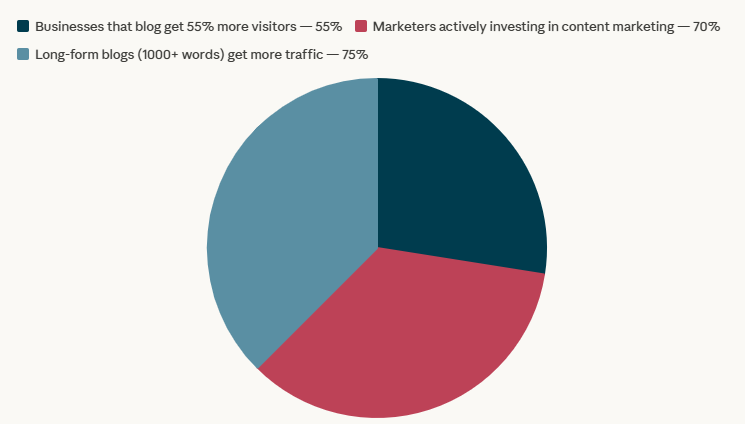
- According to HubSpot, businesses that blog get 55% more website visitors than those that don’t.
-
- A report by Content Marketing Institute shows that 70% of marketers actively invest in content marketing, and blogs are a major part of it.
-
- Research from Semrush found that long-form blogs (1000+ words) get more traffic and backlinks compared to short articles.
Now think about it.
If so many people are writing blogs, why are only a few ranking?
Because most blogs don’t actually help the reader. They just exist.
That’s where your approach changes everything. When you focus on clarity, real understanding, and genuine writing, you’re already ahead of 80% of the competition.
Why Readers Can Tell the Difference
People are smarter than we think. Even if they don’t analyze every line, they can feel when something is off. When a blog lacks clarity, depth, or genuine intent, readers don’t stay. They leave within seconds.
Think about it. When you search for something, you’re not just looking for information. You’re looking for clarity. You want someone to explain it in a way that makes sense. If the blog doesn’t do that, it fails, no matter how “optimized” it is.
What Makes a Blog Truly Valuable
Writing for Humans, Not Algorithms
Here’s the simple truth. A blog is not written for Google. It’s written for people. Google just helps people find it.
If you focus only on keywords, you’ll end up writing something that sounds forced. But if you focus on helping someone understand something better, the keywords will naturally fall into place.
A good blog feels like a conversation. It doesn’t feel like a lecture or a textbook. It feels like someone is explaining things to you in a simple and clear way.
Solving Real Problems
Every blog should answer a question or solve a problem. That’s it. That’s the core.
Before writing, ask yourself:
“What confusion am I clearing?”
“What will the reader understand after reading this?”
If you can’t answer these questions, the blog will feel empty. But if you can, your content will automatically become valuable.
Understanding Your Reader Before You Write
Identifying Pain Points
You can’t write a useful blog if you don’t understand who you’re writing for.
Are they beginners? Students? Professionals?
Each group has different needs.
For example, a beginner searching “how to write a blog” is probably confused. They don’t want technical terms. They want simple guidance. They want clarity.
So your job is not to impress them. Your job is to help them.
Writing Like You’re Talking to One Person
Instead of thinking about writing for “everyone,” imagine you’re explaining it to one person sitting in front of you. This changes everything.
Your tone becomes natural. Your sentences become simpler. Your explanations become clearer.
And that’s exactly what makes a blog engaging.
Choosing the Right Blog Topic
Keyword + Intent = Winning Topic
A good topic is not just about keywords. It’s about intent. What is the user really looking for?
For example:
“How to write blogs” is a keyword.
But the intent is: “Teach me in a simple way.”
So your blog should focus on teaching, not just listing points.
Connecting Topics with Digital Marketing
If you’re writing for a platform like WhiteScholars, your blog should also connect with digital marketing. Why? Because blogging is a part of digital marketing.
Blogs drive traffic. They build authority. They help in SEO. So while writing, you can naturally connect how blogging helps in building online presence, especially for students learning digital marketing.
Structuring Your Blog the Right Way
Simple, Clean, and Easy Flow
A blog should feel easy to read. Not complicated. Not heavy.
Start with a strong introduction. Then move step by step. Each section should connect with the next.
Avoid jumping between ideas. Keep it smooth.
Using Headings to Guide the Reader
Headings are like signboards. They tell the reader what’s coming next.
Good headings make your blog easier to scan. And in today’s fast-paced world, that matters a lot.
Writing Style That Feels Natural
Conversational Tone
This is where most people struggle. They try to sound “professional” and end up sounding robotic.
Instead, write like you speak. Keep it simple. Use everyday words. Don’t try to impress. Try to connect.
Avoiding Robotic Language
Avoid phrases that feel artificial. Avoid overcomplicated sentences.
If a sentence sounds like something you wouldn’t say in real life, rewrite it.
How to Make Your Blog SEO-Friendly (Without Overdoing It)
Smart Keyword Placement
Yes, keywords are important. But they should fit naturally.
Use your main keyword in:
-
- Title
-
- First paragraph
-
- Few headings
-
- Throughout the content (naturally)
Don’t force it. If it doesn’t fit, leave it.
Writing for Google AI Overview
Google is getting smarter. It now understands context, not just keywords.
So focus on:
-
- Clear explanations
-
- Direct answers
-
- Well-structured content
If your blog genuinely helps readers, it has a higher chance of appearing in AI overviews.
Editing: The Step Most People Skip
Read It Like a Reader
Once you finish writing, don’t publish immediately. Read it again.
But this time, read it as if you’re the reader. Does it make sense? Is it clear?
Remove Unnecessary Words
Sometimes, less is better. Remove words that don’t add value.
Keep your writing clean and focused.
Adding Real Value to Stand Out
Examples and Personal Touch
Examples make everything easier to understand. They turn abstract ideas into something real.
Even small personal insights can make your blog feel more genuine.
Clarity Over Complexity
Simple writing always wins. Always.
You don’t need big words. You need clear ideas.
Consistency is What Builds Authority
Writing Regularly
One blog won’t change everything. But consistent blogging will.
Over time, your content builds trust. It builds authority. It starts ranking.
Learning From Each Blog
Every blog teaches you something. What worked, what didn’t.
Improve with each post. That’s how you grow.
Conclusion
Writing a blog is not about filling words. It’s about sharing understanding. It’s about helping someone who is confused find clarity.
If you focus on being genuine, simple, and helpful, your blog will stand out. Not just for Google, but for real people.
And in the end, that’s what truly matters.
FAQ’s
1. How can I make my blog rank on Google?
Focus on solving real problems, use keywords naturally, and write clear, helpful content. Consistency also plays a big role.
2. Is it okay to use AI tools for writing blogs?
Yes, but don’t depend on them completely. Always add your own understanding and make the content feel human.
3. How long should a blog be?
It depends on the topic, but generally, detailed blogs (1000+ words) perform better if they provide real value.
4. What is the biggest mistake in blogging?
Copy-pasting content without understanding it. This leads to poor quality and low engagement.
5. How do I improve my writing skills?
Practice regularly, read good blogs, and always focus on clarity and simplicity.
