

What is Data Science? : Part 1 — Overview & Lifecycle.
Discover data science basics, overview & lifecycle in Part 1: this article delves into its history, importance, full lifecycle, and key components & more.
Introduction
What exactly is data science, and why is it so important in today’s world? Imagine being able to predict the outcome of the next big sports game, analyze millions of customer reviews to create the perfect product, or even detect potential diseases before they become life-threatening.
All of this is possible with the power of data science. So, if you’re interested in learning more about this exciting field and how it can change the world, read on!
Brief History
The term “data science” was coined in 2008 by DJ Patil and Jeff Hammerbacher, who were working at LinkedIn and Facebook, respectively. Since its inception in the 1960s, data science has advanced significantly. The field, which was often referred to as “data processing” or “computer science,” has developed into a multidisciplinary approach to data analysis that combines statistics, computer science, and domain knowledge.
The creation of statistical software in the 1970s, which facilitated the analysis and visualization of data, was one of the major turning points in the history of data science. However, the phrase “Data Science” was first used in the early 2000s, and the field kept growing as new tools and technologies were created to deal with the growing amount of generated data. Data science is now an essential part of many sectors, including finance, healthcare, and entertainment.
Looking back, it is evident that the field has advanced significantly in a short amount of time. And it’s intriguing to think about what the future of data science holds, given the speed of technological advancement.
What is Data Science?
In the current digital era, the term “data science” is frequently used, but what does it actually mean? Fundamentally, it is the process of drawing insights from data by combining statistical analysis, computer science, machine learning algorithms, and subject-matter expertise. Using the findings of this process, data scientists are able to make better decisions about future states.
Data science is a multidisciplinary field that extracts knowledge and insights from structured and unstructured data through statistical analysis, machine learning, and domain expertise. It aids in informed decision-making, predictive modeling, and pattern recognition, driving advancements across industries like healthcare, finance, and technology.
Data Science has developed into an interdisciplinary field that involves the extraction, analysis, visualization, and interpretation of data.
Why is Data Science Important?
It is impossible to imagine this world without Data Science. The field has permeated every industry, from forecasting customer behaviour to streamlining corporate operations, serving as the foundation for digital transformation and enabling businesses to stay competitive and make wise decisions.
The exponential expansion of data is one of the primary causes of the increasing importance of data science. This expansion has stemmed from the growth of social media, mobile technology, things going digital, and technologies like the internet of things (IoT).
Consequently, businesses require competent data scientists to interpret this data and derive insightful conclusions. Data science is also crucial in industries like healthcare, where it enhances patient outcomes and creates novel treatments.
Summing it up, it propels innovation and advancement in every sphere of the modern world. As we produce more data and discover new uses for it, the significance of data science will only increase.
Data Science Lifecycle
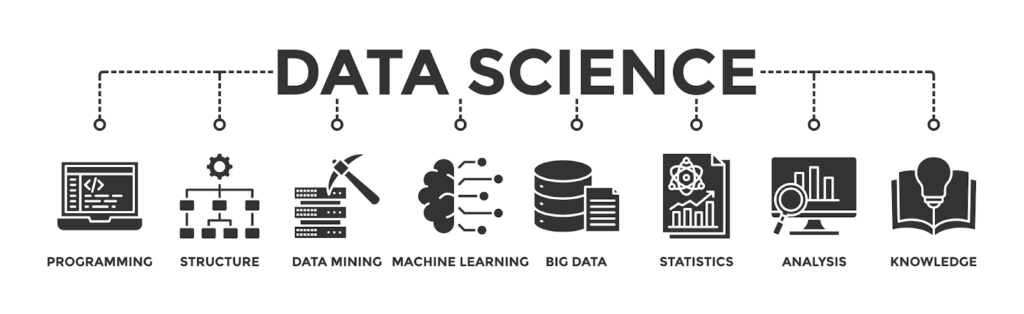
The data science lifecycle is a process that outlines the steps involved in solving a data science problem. It is a systematic approach that helps data scientists to structure their work, collaborate with stakeholders, and achieve their goals efficiently.
Problem Formulation
In this stage, the data scientist works with stakeholders to understand the business problem and define the goals and objectives of the project.
Data Collection
This stage involves collecting the necessary data for the project. The data can come from various sources, such as databases, APIs, or web scraping.
Data Preparation
This stage involves cleaning and transforming the data to make it suitable for analysis. This includes tasks such as handling missing values, removing outliers, and scaling the data.
Data Exploration
In this stage, the data scientist explores the data to gain insights and identify patterns. It involves visualization, statistical analysis, and machine learning techniques.
Feature Engineering
This stage involves selecting and creating the most relevant features for the analysis. You need domain knowledge, statistical analysis, and machine learning techniques.
Model Building
In this stage, the data scientist builds a model to solve the problem. It involves various machine-learning techniques like regression, classification, and clustering.
Model Evaluation
This stage involves evaluating the model’s performance on the data. This stage covers accuracy, precision, recall, and F1-score metrics.
Model Deployment
This stage involves deploying the model in a production environment. This can include integrating the model into an application or system.
Model Monitoring
In this stage, the data scientist monitors the model’s performance in production and makes adjustments as needed. It involves tracking metrics such as accuracy, precision, and recall.
Model Retraining
This stage involves retraining the model as new data becomes available. This can involve updating the model’s parameters or even retraining the entire model.
Key Components of Data Science
The main elements of data science are:
- Data Strategy: A data strategy is a predetermined plan that includes all long-term processes’ information, like the methodology, data type, people, and rules required to manage data and assets. Data scientists need a prime and proper strategy to ensure security and efficiency.
- Data Engineering: Data science engineering involves designing and building ML systems that primarily allow data collection and analysis.
- Data Analysis: It entails studying and finding certain patterns in the data using statistical methods and machine learning algorithms.
- Data Visualization: Presenting the analysis’s findings in a visual manner, using graphs, scatter plots, heatmaps, and bar charts, is known as data visualization.
Start Your Data Science Career Today
Data Science has become an essential part of every industry. The future of data science looks bright, but there are also challenges that need to be addressed, such as ethical concerns and lack of diversity. Therefore, it is important for data scientists to use their skills to benefit society as a whole.
For data scientists who want to keep up with the most recent developments and industry best practices, Checkout our comprehensive course
Data Science Course in Hyderabad at WhiteScholars
For graduates willing to go deeper into prompt engineering algorithms and machine learning, a data science course in Hyderabad through WhiteScholars can be the next step after foundational analytics skills. This typically adds supervised and unsupervised learning, model evaluation, feature engineering, and possibly deep learning basics, framed around real-world problems.
With this path you can:
- Work toward roles like junior data scientist, ML engineer trainee, or applied AI analyst, which require both coding skills and understanding of business use-cases.
- Position yourself for long-term growth, as data science remains one of the highest-paying and fastest-growing segments in the engineering job market in India through 2026 and beyond.
Why WhiteScholars Courses Matter
This 2026, employers across tech and digital domains are less impressed by degrees alone and more focused on demonstrable skills and portfolios. Job descriptions in data analytics, data science, and digital marketing increasingly demand hands-on experience with tools, real projects, and the ability to showcase measurable impact.
Because of this shift:
- A well-designed data science course and data analytics course in Hyderabad with live projects, case studies, and mentorship can create a clear advantage over graduates who only have theoretical knowledge.
- Similarly, a digital marketing course in Hyderabad that includes campaign simulations, ad account practice, and analytics dashboards helps you show actual results to recruiters and clients.
Local training also makes networking easier, connecting you with nearby companies, startups, and alumni who can refer you to internships and jobs in Hyderabad’s vibrant tech corridor.
A message from WhiteScholars
Hey, we are team WhiteScholars here. We wanted to take a moment to thank you for reading until the end and for being a part of this blog series.
Did you know that our team run these publications as a volunteer effort to empower learners, share practical insights in emerging technologies, and create a growing community of knowledge seekers
If you want to show some love, please take a moment to check us on instagram, linkden. You can also explore more learning resources on our website WhiteScholars.
FAQ’s
1. What is data science, and why is it important today?
Data science is a multidisciplinary field that extracts insights from structured and unstructured data using statistical analysis, machine learning, computer science, and domain expertise. It’s crucial because it drives informed decisions, predictive modeling, and innovation across industries like healthcare, finance, and entertainment handling the explosion of data from social media, IoT, and digital tech to predict outcomes, optimize operations, and boost competitiveness.
2. When was the term “data science” coined, and how has it evolved?
The term was coined in 2008 by DJ Patil (LinkedIn) and Jeff Hammerbacher (Facebook). Roots trace to the 1960s as “data processing” or computer science, with major advances in the 1970s via statistical software for analysis and visualization. It grew in the 2000s with tools for big data, becoming essential today.
3. What are the main steps in the data science lifecycle?
The lifecycle is a systematic process:
- Problem Formulation (define goals with stakeholders).
- Data Collection (from databases, APIs, etc.).
- Data Preparation (cleaning, handling missing values).
- Data Exploration (visualization, patterns).
- Feature Engineering (select/create relevant features).
- Model Building (regression, classification, etc.).
- Model Evaluation (accuracy, precision, recall, F1-score).
- Model Deployment, Monitoring, and Retraining (production integration and updates).
4. What are the key components of data science?
- Data Strategy: A long-term plan for methodology, data types, people, and rules to manage assets securely.
- Data Engineering: Building systems for data collection and analysis.
- Data Analysis: Finding patterns via statistics and machine learning.
- Data Visualization: Displaying insights with graphs, charts, heatmaps, etc.
5. How can I start a career in data science?
Dive into the field by mastering its lifecycle, tools, and components through hands-on practice. Data science powers every industry with a bright future, despite challenges like ethics and diversity focus on using skills for societal good. Check out comprehensive courses for the latest trends and best practices to build your expertise.