
Beyond E-E-A-T: Why N-E-E-A-T-T is New Standard for 2026 SEO
Let us understand the new SEO standard that is one step ahead of E-E-A-T and discuss the significance of N-N-E-A-T in 2026.
Introduction
N-E-E-A-T-T represents an expanded framework for digital credibility, incorporating Notability and Transparency alongside Google’s traditional E-E-A-T signals.
This framework serves as the method modern search engines utilise to assess the human trustworthiness of content creators, website owners, and the content itself, determining recommendations for users.
Initially, this concept may seem confusing. For decades, the focus was on acquiring backlinks as the primary currency of online authority. However, as 2026 approaches, the landscape has shifted. The focus has transitioned from merely a “popularity contest” based on links to a contest of human credibility.
What is N-E-E-A-T-T?
N-E-E-A-T-T stands for Notability, Experience, Expertise, Authoritativeness, Trustworthiness, and Transparency. It is a holistic approach to proving to Google and your audience that you are a legitimate, recognisable voice in your specific niche.
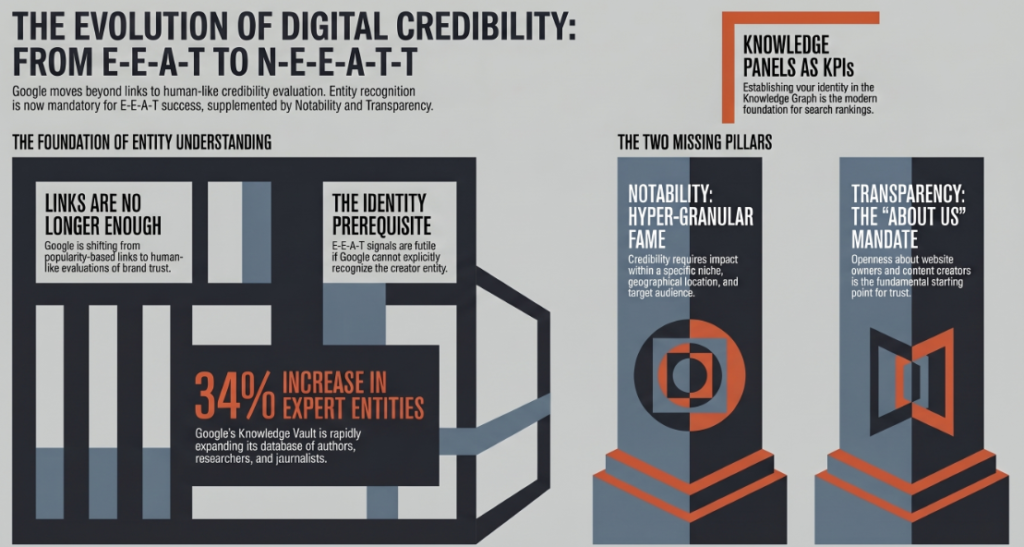
The Missing Links: Notability and Transparency
Google doesn’t explicitly talk about these two, but they are the key.
- Notability: This concept isn’t just about being “famous”. It’s about having a significant impact or recognition within a specific field, topic, or location.
- Transparency: This is non-negotiable. It means being open about who is behind the curtain, who owns the site, and who wrote the article.
How to Build Your Digital Entity (Step-by-Step)
If Google can’t identify who you are, your E-E-A-T signals mean nothing. You have to move from being a “string” of text to a “thing” in their knowledge graph.
- Define the Entity: Clearly identify the website owner and the content creators (authors) as distinct people or organization.
- Optimize “About” Pages: Create detailed, helpful “About Us” and “Author” pages that list credentials, previous work, and awards.
- Secure a Knowledge Panel: Use your Google Knowledge Panel as a key performance indicator (KPI) to see if Google officially recognises you.
- Target Niche PR: Instead of chasing huge, general publications, get featured in hyperrelevant, niche-specific resources that align with your audience.
- Audit for Transparency: Ensure every platform where your audience meets your brand is clear and honest about your identity.
Real-World Insight: The Power of Niche Notability
In real projects, I’ve seen brands struggle because they want to be “famous for everything”. Google doesn’t work that way.
Example:
If you are a digital marketer in Hyderabad, being a certified trainer at the WhiteScholars Training Institute holds more significance for your local “notability”.
Google values that topical and geographical relevance because it signals a trusted solution for a specific group of people.
Insight: Links vs. Human Credibility
Most beginners struggle with the idea that links are losing their crown. While they still matter, they are becoming less effective as Google gets better at mirroring human judgment.
| Feature | Traditional SEO (Links) | Modern SEO (N-E-E-A-T-T) |
| Primary Signal | Backlink volume and authority | Entity recognition and human trust |
| Focus | Webpages and URLs | Website owners and content creators |
| Core Goal | Popularity | Credibility and problem-solving |
Why This Matters for Careers
This is where things get interesting for professionals. Understanding these concepts isn’t just for “SEO nerds” anymore; it’s a vital business skill.
Companies in 2026 are eager for experts who can connect human trust with AI algorithms.
If you’re serious about building a career in digital marketing, learning to manage “personal brand intelligence” and entity optimisation is a high-demand skill that can lead to roles like SEO strategist or digital brand consultant.
To advance your career in digital marketing, investing in structured training is essential to keep pace with the ever-changing algorithms. Enroll in digital marketing classes in Hyderabad offered by the WhiteScholars digital marketing course, enhanced by AI technology.
Why Identity is Your SEO Foundation
This is where many people struggle. One can have the best experience and expertise in the world, but if Google cannot explicitly recognise who they are, N-E-E-A-T-T signals mean nothing.
Consider it this way: an artist cannot be credited for a masterpiece if their identity is unknown. The system simply cannot acknowledge their reputation and expertise.
In the past, SEO focused on “strings” of text and links. Today, it is evolving toward “things”, indicating a desire to comprehend distinct entities within its knowledge graph.
How to prioritise entity optimisation:
- Identify the “Who”: Ensure Google can distinguish between the website owner (the corporation) and the content creator (the individual author)
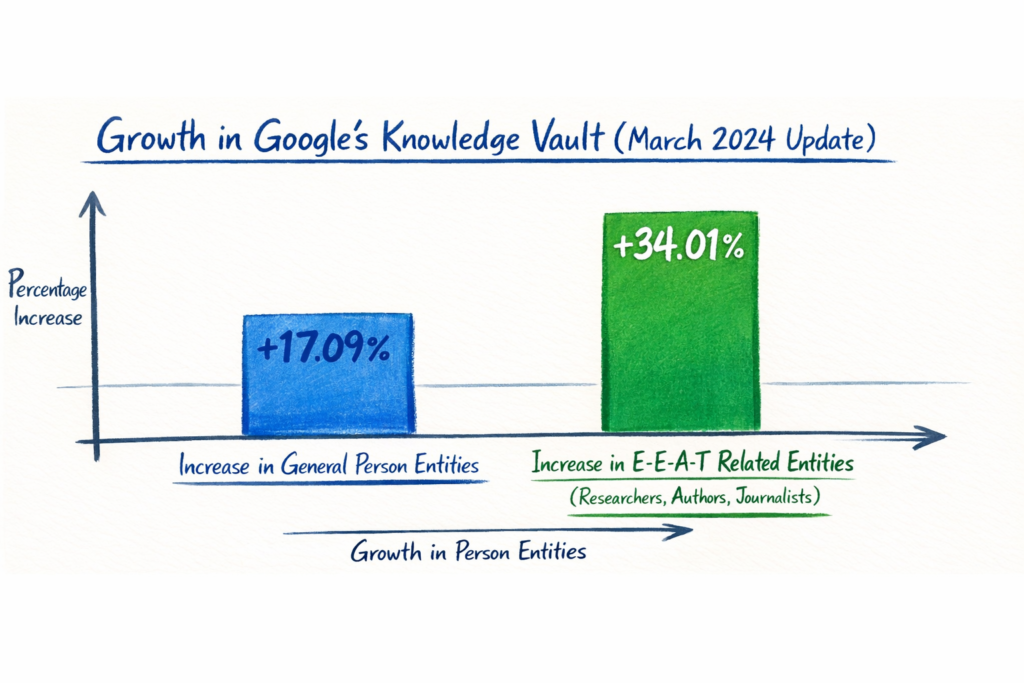
- Monitor the Knowledge Vault: Google is rapidly increasing the number of personal entities it tracks, especially for authors and researchers.
- Use the Knowledge Panel as a KPI: Your goal is to trigger a Knowledge Panel for your name or brand; achieving this is the ultimate proof that Google officially recognises your “thingness”.
- Be Consistent Everywhere: Transparency isn’t just for your “About” page; it must extend to every platform where your audience meets your brand to reinforce your identity.
Quick Summary
- N-E-E-A-T-T adds notability and transparency to the standard E-E-A-T framework.
- Entity understanding is the foundation; Google must know who you are to reward your expertise.
- Transparency starts with clear “About” pages and honest authorship.
- Notability is about niche impact and recognition, not just broad fame.
Final Thoughts
At the end of the day, Google’s mission is to guide users to trustworthy solutions. If your human audience trusts you today, you’re already winning the short-term game.
The next step is simply packaging that authority so search engines can’t help but recommend you as the go-to solution in your field.
Ultimately, the shift toward N-E-E-A-T-T marks the end of the “popularity contest” era defined solely by links. The current landscape is a human credibility contest where Google aims to mirror the way people evaluate trust.
If your human audience trusts you today, you are already winning the short game; packaging that trust for search engines is what secures your long-term position as a “go-to” authority.
Frequently asked Questions
1. Is N-E-E-A-T-T an official Google algorithm?
No, Google representatives have stated that there isn’t a specific “E-E-A-T algorithm”. Instead, credibility is baked into the core algorithms that generate results.
2. How do I know if Google recognises me as an entity?
The best way is to look for a knowledge panel when you search for your name or your brand. This shows Google has moved you from a “string” to a “thing” in its database.
3. Why is transparency so important for SEO?
Transparency builds trust with both humans and algorithms. Google’s Quality Rater Guidelines explicitly instruct evaluators to look for openness regarding who is responsible for the content.
4. What happens if Google doesn’t recognise me as an “entity”?
Without explicit recognition of the website owner or content creator, your E-E-A-T signals mean very little. It is like an artist painting a masterpiece but forgetting to sign it; Google cannot credit your expertise or reputation if it doesn’t know exactly who you are.
5. Do I need to be world-famous to satisfy the “Notability” requirement?
No, notability is hyper-niche and granular. It is about having a significant influence and recognition within a specific industry, topic, or geographical location rather than broad, general fame.
