

Data Science vs Data Analytics Which Career Path Is the Right Choice in 2026?
Explore the key differences between Data Science and Data Analytics, their career opportunities, skills, and which course is the right choice for 2026.
Introduction
Data is driving smarter decisions across almost every industry, making Data Science and Data Analytics two of today’s most popular career paths.
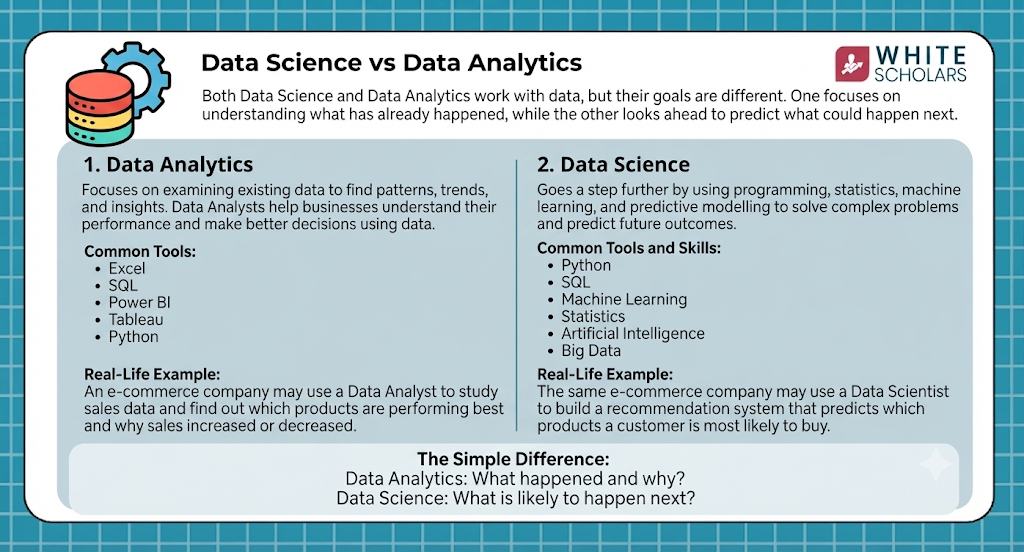
But what’s the difference? While Data Analytics focuses on finding insights from existing data, Data Science goes further by using machine learning and predictive models to solve complex problems and forecast future trends.
For students, freshers, and working professionals, choosing between these two fields can be confusing.
Let’s explore Data Science vs Data Analytics, the skills, career opportunities, and which path could be the right fit for different career goals.
Key Differences Between Data Science and Data Analytics
Although Data Science and Data Analytics are closely connected, they differ in their purpose, tools, skills, and career paths.
| Factor | Data Analytics | Data Science |
| Main Focus | Analysing existing data | Predicting future outcomes |
| Key Question | What happened and why? | What will happen next? |
| Tools | Excel, SQL, Power BI, Tableau | Python, SQL, Machine Learning |
| Skills | Data cleaning, visualisation, reporting | Programming, statistics, machine learning |
| Work Type | Dashboards, reports, business insights | Predictive models, AI, advanced analytics |
| Career Roles | Data Analyst, Business Analyst, BI Analyst | Data Scientist, ML Engineer, AI Specialist |
| Best For | Those interested in business insights and visualisation | Those interested in programming, AI, and machine learning |
In simple terms: Data Analytics helps businesses understand the past and present, while Data Science helps them predict the future and solve complex problems.
Both fields have excellent career potential. The right choice depends on the type of work, skills, and career direction a person wants to pursue.
Career Opportunities in Data Science and Data Analytics
Both fields offer exciting career opportunities, but the roles and responsibilities can be quite different. The right career path depends on a person’s technical skills, interests, and long-term goals.
Career Opportunities in Data Analytics
Data Analysts help businesses turn raw data into useful insights. They are needed across industries such as IT, finance, healthcare, retail, marketing, and e-commerce.
Popular Job Roles:
- Data Analyst
- Business Analyst
- BI Analyst
- Marketing Analyst
- Financial Analyst
- Reporting Analyst
Typical Work Includes:
- Analysing business data
- Creating dashboards and reports
- Finding trends and patterns
- Tracking KPIs and performance
- Supporting business decisions
Career Opportunities in Data Science
Data Scientists work on more advanced problems using programming, statistics, machine learning, and AI. Their skills are highly valuable in industries that rely on prediction and automation.
Popular Job Roles:
- Data Scientist
- Machine Learning Engineer
- AI Engineer
- Data Science Consultant
- ML Specialist
- Research Scientist
Typical Work Includes:
- Building predictive models
- Developing machine learning solutions
- Working with large datasets
- Creating AI-powered applications
- Solving complex business problems
Which Career Has Better Opportunities?
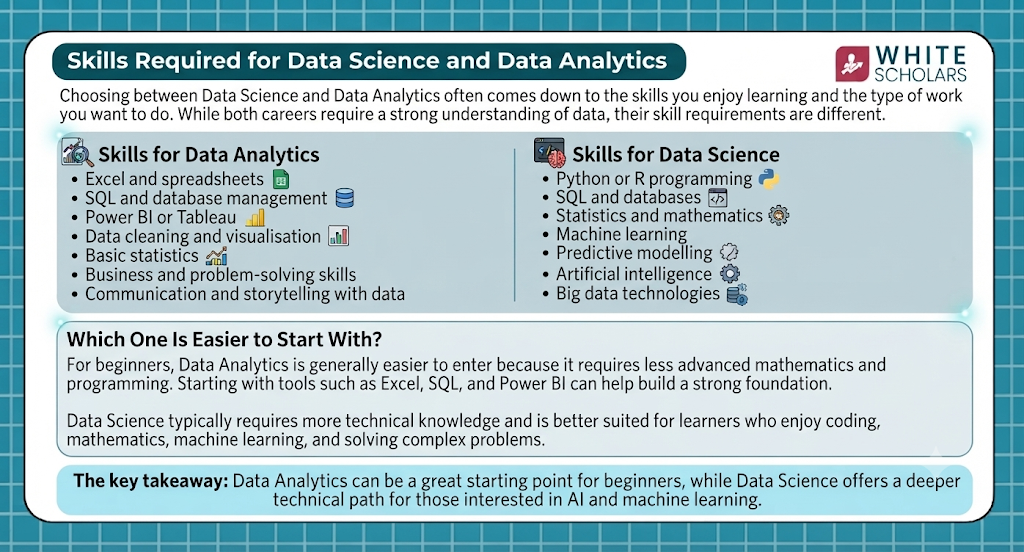
There is no single answer. Data Analytics offers an accessible entry point for beginners and professionals who enjoy business insights and visualization. Data Science is a more technical path for those interested in programming, machine learning, and AI.
The best choice is the one that matches a person’s interests, strengths, and career goals.
Data Science vs Data Analytics Which Course Is Right?
Choosing between Data Science and Data Analytics depends on career goals, interests, and technical background. Both offer strong career opportunities, but they suit different types of learners.
Choose Data Analytics If
- You are a beginner entering the data field
- You enjoy working with numbers and business problems
- You are interested in dashboards and data visualisation
- You want to start working with tools like Excel, SQL, and Power BI
- You prefer a career path that requires less advanced programming
Popular Career Options:
Data Analyst, Business Analyst, BI Analyst, Marketing Analyst
Choose Data Science If
- You enjoy programming and mathematics
- You are interested in machine learning and artificial intelligence
- You want to build predictive models
- You are comfortable learning Python and advanced statistics
- You want to work on complex data and AI-based problems
Popular Career Options:
Data Scientist, Machine Learning Engineer, AI Engineer
The Bottom Line
Data Analytics is often a better starting point for beginners who want to enter the data industry quickly and build a strong foundation.
Data Science is a better choice for those who are interested in programming, machine learning, and advanced AI applications and are ready for a more technical learning journey.
There is no universally “better” option. The right course is the one that aligns with individual interests, existing skills, and long-term career goals.
Conclusion
Data Science and Data Analytics are both exciting career paths with growing opportunities across industries. While Data Analytics focuses on understanding data and finding actionable insights, Data Science goes deeper into machine learning, AI, and predictive modelling.
For beginners, Data Analytics can be a great starting point to build skills in Excel, SQL, Power BI, and data visualisation. Those who enjoy programming, mathematics, and AI may find Data Science a better long-term fit.
The key is to choose a path based on interests, strengths, and career goals. With the right skills, practical projects, and continuous learning, both fields can lead to rewarding careers in the growing data industry.
Final Advice
Choosing between Data Science and Data Analytics is not about finding which course is better, it’s about finding which path fits your career goals.
If you’re a beginner, starting with Data Analytics can help you build a strong foundation in Excel, SQL, Power BI, and data visualisation. As your skills grow, you can always explore Python, machine learning, and move towards Data Science.
The best way to learn is through structured training, practical projects, and real-world datasets. Learning from experienced professionals and working on hands-on projects can help turn theoretical knowledge into job-ready skills.
Start with the right foundation. Build practical skills. Keep learning. With the right guidance and consistent practice, a career in Data Science or Data Analytics can open the door to exciting opportunities in 2026 and beyond.
FAQs
1. What is the difference between Data Science and Data Analytics?
Data Analytics focuses on analysing existing data to identify trends and support business decisions. Data Science uses advanced techniques such as machine learning and predictive modelling to solve complex problems and predict future outcomes.
2. Which is better for beginners: Data Science or Data Analytics?
Data Analytics is generally a better starting point for beginners. Tools like Excel, SQL, and Power BI are relatively easy to learn and can help build a strong foundation before moving into advanced Data Science concepts.
3. Is Data Science harder than Data Analytics?
Data Science is generally more technically demanding because it involves programming, statistics, mathematics, machine learning, and predictive modelling. Data Analytics typically has a lower entry barrier.
4. Do Data Analysts need to learn Python?
Python is not always mandatory for entry-level Data Analyst roles, but learning it can be a valuable advantage. Many analysts use Python for data cleaning, automation, and advanced analysis.
5. Which career has better job opportunities: Data Science or Data Analytics?
Both fields offer strong career opportunities. Data Analytics provides opportunities in business intelligence, reporting, finance, marketing, and operations, while Data Science offers opportunities in machine learning, AI, predictive analytics, and advanced data solutions.
6. Can a Data Analyst become a Data Scientist?
Yes. A Data Analyst can transition into Data Science by developing skills in Python, statistics, machine learning, mathematics, and predictive modelling. Many professionals build their careers progressively from analytics into more advanced data roles.
7. Which course should a fresher choose?
Freshers who are new to the data field can consider starting with Data Analytics to build a strong foundation in data handling, SQL, Excel, and visualisation. Those with a strong programming or mathematical background may also consider starting directly with Data Science.
8. Is a career in Data Science and Data Analytics good in 2026?
Yes. Businesses across industries continue to rely on data for decision-making, automation, and AI-driven solutions. Professionals with practical skills in data analysis, visualisation, machine learning, and AI can find opportunities across technology, finance, healthcare, retail, and other industries.
