

Can AI ever replace full-stack job opportunities
In a rapidly evolving world, the ability to adapt to these changes is crucial. This blog focuses on the potential of AI to take over full-stack job opportunities in the future.
What is Full Stack Development?
Full-stack development is a wide domain within the vast field of computer science where a developer handles both the “behind the scenes” logic and the user-facing components of an application.
In simple terms, a full-stack developer is capable of building an entire software product from scratch, managing every layer of the technology stack.
The “stack” is generally divided into several key areas:
- The Front-End: This is the part of the application that users interact with directly. The baseline for any front-end work includes HTML, CSS, and JavaScript. From these baselines, various frameworks have emerged, such as React, Angular, Vue, and Next.js.
- The Back-End: This is the “behind the scenes” engine of the application. It involves server-side logic and frameworks that handle data processing. Popular choices mentioned include Node.js (a JavaScript-based environment) and Spring (a Java-based framework).
- Databases: A critical component of the back-end is the database, where application data is stored and retrieved. Developers must “touch base” with SQL and other database types to manage this information effectively.
Why do we need full-stack developers?
The necessity for full-stack skills stems from the industry’s demand for developers who can understand the entire lifecycle of an application.
Companies like Microsoft look for candidates who can not only solve algorithmic problems but also engage in system design, including Low-Level Design (LLD) and High-Level Design (HLD).
Full-stack developers are essential because:
- End-to-End Capability: They can build functional “clones” of complex platforms like YouTube or Facebook, providing a working link that showcases their practical knowledge and experience.
- Efficiency in Small Teams: In growth-focused teams, such as those at BrowserStack, developers often need to handle multiple aspects of a product, from pricing and subscriptions to the underlying backend server design.
- Problem Solving: They possess the techniques to use or build some applications or to build software through their mastery of data structures and algorithms (DSA) combined with development skills.
- Career Versatility: Large tech companies (Google, Microsoft, Uber) are willing to pay significant packages—ranging from 5–8 lakhs for freshers in India to much higher figures for experienced experts—to individuals who can navigate these complex domains.
How the Growth of AI is Affecting People Learning Full Stack
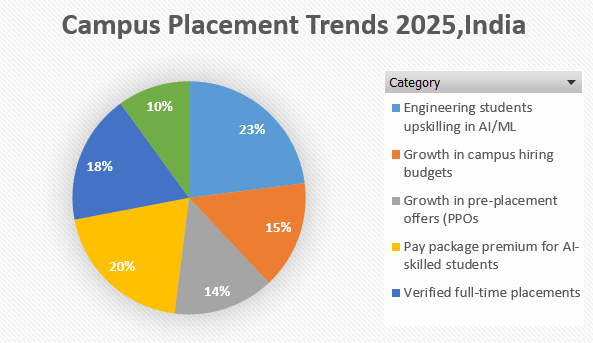
The rise of artificial intelligence is changing how people learn full-stack development. Some worry that AI could make these jobs unnecessary, but experts say the main effect is on improving productivity and efficiency, not replacing jobs entirely.
1. Increased Productivity Requirements
The most immediate effect of AI on learners is the change in the expected pace of work. A developer today can complete tasks in an afternoon (5 to 7 hours) that would have previously taken four to five days.
This means that for those learning the craft, the bar for “entry-level” productivity has been raised. You are no longer just competing against other humans; you are competing against a human-AI hybrid workflow.
2. Shift in Focus Toward Fundamentals
Because AI can generate boilerplate code (like basic HTML/CSS or standard API endpoints), learners must master the fundamentals.
If a tool can write the code, the developer’s value shifts toward understanding why the code works, how to optimise it, and how to debug the output of the AI. Confidently knowing your programming language is more important than ever because the way you communicate will change, but the underlying things remain the same.
3. Integration of AI Tools into the Workflow
Learners are now expected to utilise AI tools to increase their output. Instead of spending days on a single feature, developers use AI to “cope up” with heavy workloads, allowing them to focus on more complex architectural decisions, such as system design and optimisation.
Will AI Ever Replace Full Stack?
Will AI replace your job? The short answer is “not completely”, but there is a significant catch.
“AI will replace people who do not use AI with people who do use AI to achieve better efficiency.”
Yes, AI will replace you if you are not upgrading yourself. Companies are laying off people not because it is “the end of the world,” but because the availability of developers who cannot use these tools is low. To avoid being replaced, you must:
- Be Cautious but Proactive: Software engineers should be aware of the changes that are happening and know about the evolving technologies but should actively utilize those tools as much as they can.
- Focus on High-Level Skills: AI is excellent at repetitive coding tasks, but it still struggles with high-level system design and hiring-manager-level behavioral/technical synthesis.
- Improve Productivity: If you can do 5 days of work in 5 hours using AI, you become an indispensable asset to the team.
In essence, AI acts as a force multiplier. If your base value (your fundamental knowledge) is zero, multiplying it by AI still results in zero.
If your base value is high, AI makes you superhuman. If you refuse to upgrade your workflow, your jobs will be used by someone else to take your place.
Roadmap to Succeed in Full Stack in the Generation of AI
Succeeding in the current era requires a blend of traditional computer science and mastering modern tools. Based on the interview experiences, here is a structured roadmap:
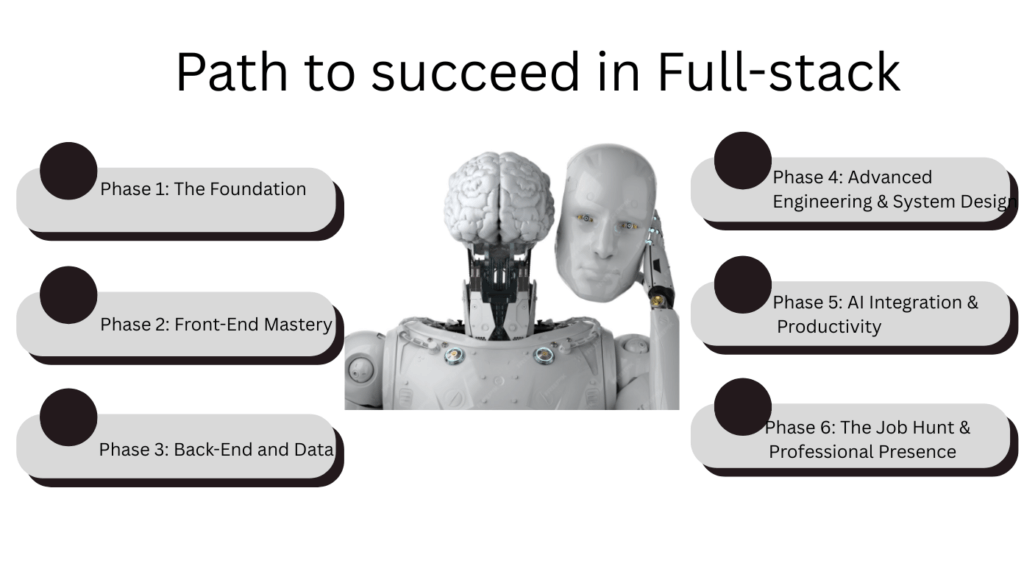
Phase 1: The Foundation (The “Basics”)
- Pick a Programming Language: Choose one language (like JavaScript or Java) and become confident with it. Don’t worry about jumping between languages; the underlying logic is what matters.
- Data Structures and Algorithms (DSA): This is non-negotiable for top-tier companies like Microsoft. Focus on techniques for building applications and solving problems; the sources describe this process as “fun” once you start building.
Phase 2: Front-End Mastery
- Baselines: Master HTML, CSS, and JavaScript.
- Frameworks: Start with React due to its overwhelming popularity.
- Practical Application: Build clones of popular sites (Facebook, YouTube) to demonstrate you can handle real-world layouts and user interactions.
Phase 3: Back-End and Data
- Server-Side Logic: Learn Node.js or Java Spring.
- Databases: Master SQL. You must understand how to design a backend server that handles specific tasks effectively.
- Machine Coding: Practice “machine coding” questions, which involve building a functional backend server for a simple job in a timed environment.
Phase 4: Advanced Engineering & System Design
- Low-Level Design (LLD): Learn how to write code for specific functionalities within a product, focusing on class structures and object-orientated principles.
- High-Level Design (HLD): Understand the “big picture” of how different Microsoft-scale products are structured and how they scale.
- Optimisation: Always focus on providing the optimised approach to problems, as interviewers look for efficiency beyond just “making it work”.
Phase 5: AI Integration & Productivity
- Tool Mastery: Actively use AI tools to speed up your development process.
- Productivity Goals: Aim to reduce your development time significantly (e.g., turning a multi-day project into a single-day task).
Phase 6: The Job Hunt & Professional Presence
- Portfolio: Ensure you have working links for your projects so recruiters can see your practical experience in seconds.
- Referrals: Leverage LinkedIn and personal connections for referrals, as direct referrals can lead to online assessments and interviews at major firms.
- Interview Prep: Be ready for a multi-round process: Online Assessment (OA) -> DSA rounds -> System Design (LLD/HLD) -> Hiring Manager/Behavioural rounds.
The Psychology of the Developer Journey
Success in full-stack development is not just about technical skills; it is about resilience and mindset. The sources highlight several psychological aspects that are often overlooked:
1. Handling Rejection
The job-hunting process is often filled with rejections. The advice from the sources is to maintain an open mind and understand that “it’s just that it’s not your time” or “there is an opportunity which is bigger than that”. A rejection is not a failure of skill but often a timing issue.
2. Overcoming Academic Setbacks
Even successful developers at companies like Microsoft have faced failure. One source mentions getting a backlog in engineering physics and being laughed at by professors and peers. The key is to use those moments as a “realisation” to focus, resign from distractions (like class representative roles), and dedicate yourself to clearing subjects and mastering your craft.
3. The Hiring Manager Hurdle
Many candidates mistakenly think the final hiring manager round is purely behavioural. In reality, these rounds often jump back into intense technical discussions. You must be prepared to discuss your past roles (like work in growth teams or pricing/subscriptions) and your technical capabilities simultaneously for over an hour.
4. Continuous Support and Mentorship
The journey is difficult, and the sources suggest that seeking programmes with mentor support (from industry experts at companies like Google or Uber) can be beneficial, especially when navigating the “150+ most asked interview questions”.
Conclusion
Full-stack development remains a premier career path, provided that the developer views AI as a partner rather than a competitor.
By mastering the front-end, back-end, and database baselines while simultaneously adopting AI tools to achieve 10x productivity, you can thrive in the “AI generation”. The key is a relentless focus on fundamentals, system design, and the resilience to handle the inevitable rejections of the tech industry.
Frequently asked Questions
1. Will AI replace full-stack developers?
AI will not replace developers completely, but it will replace those who do not use AI with people who leverage it for better efficiency. Utilising AI tools can boost productivity so significantly that four to five days of work can now be completed in a single afternoon of five to seven hours.
2. What is the recommended roadmap for a beginner?
Start by becoming confident in one programming language, as the underlying logic remains the same even when the way you communicate with machines changes. Master front-end baselines like HTML, CSS, and JavaScript before moving to React.
3. How can I stand out to recruiters at companies like Microsoft?
Rather than just listing skills, provide working links to functional clones of platforms like YouTube or Facebook to prove your practical development experience. A recruiter should be able to see your knowledge and hands-on ability within three seconds of looking at your projects to determine if you are a fit.
4. What is the typical interview process like for major tech roles?
The process generally starts with a timed online assessment followed by multiple interview rounds focused strictly on Data Structures and Algorithms (DSA). Candidates must also clear system design rounds covering both Low-Level Design (LLD) for specific coding tasks and High-Level Design (HLD) for overall architecture.
5. How should I handle career setbacks and rejections?
View rejection not as a failure, but as a sign that it is not yet your time and that a bigger opportunity is waiting for you. Maintain a positive tone and an open mind during the job hunt to ensure you are mentally prepared and ready for the next opening.