

Creative Strategies with FAQ Schema for the AI Era
Understanding the role of FAQ in optimising a business’s search engine is often underestimated; let us look at strategies using FAQ schema in the AI era.
Introduction
Every time you search for anything on Google, have you observed the ‘people also ask’ section? Have you ever wondered how these are generated? Let me assure you that these are not generated at random; these questions, which we casually browse, can change the ranking of a company and a user’s perspective. Let us investigate how this FAQ schema works and develop creative strategies for the AI era.
The Foundations of Modern Digital Marketing
Earned media is becoming increasingly complicated in today’s digital world, as evidenced by Google changing its algorithm 812 times by 2026.
To handle this, businesses need to use strategies that follow Google’s guidelines and ensure they are visible on platforms like YouTube, Amazon, Pinterest, and app stores.
Getting high organic search results isn’t random; it requires careful planning.
The development of Google searches:
When we first started using Google to search for anything, the results looked like this.
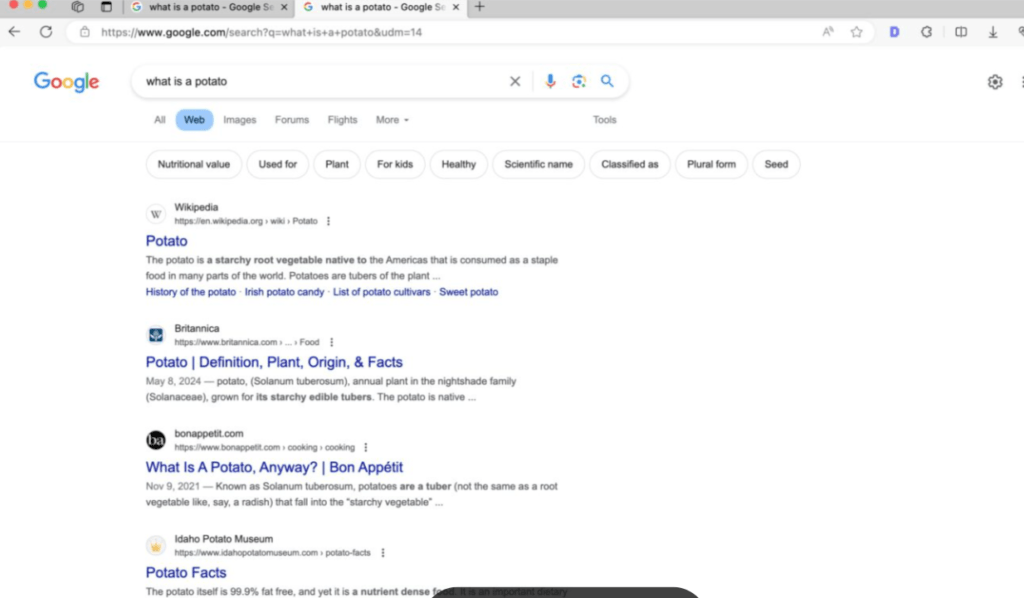
Then AI changed the game; today, when we search for anything on Google, the results are generated with a variety of changes, including AI mode with sources attached. Artificial intelligence has made searching much easier.
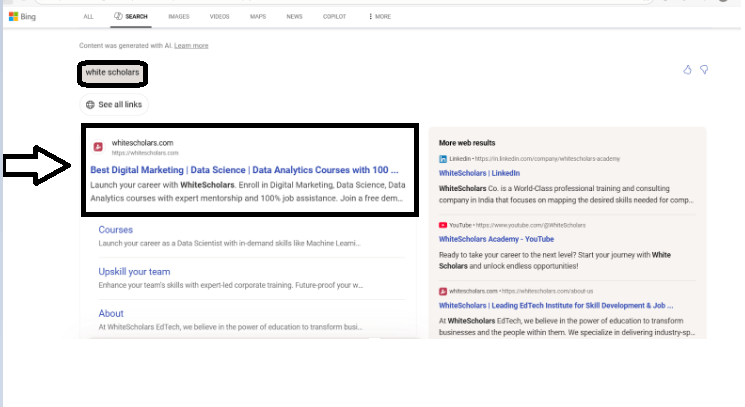
However, if you would have noticed, there is also a section dedicated to frequently asked questions named ‘People also ask’. This section is created based on the most frequently asked questions about the topic that we searched.
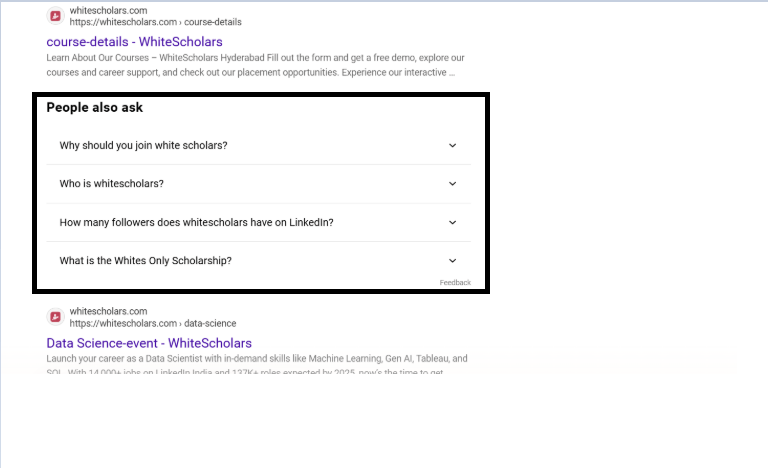
I searched for White Scholars, a digital marketing, data science, and data analytics training institute in Hyderabad, and all of the frequently asked questions about White Scholars appear in the ‘People also ask’ section.
There are several key focus areas that serve as the foundation for a strong digital presence:
- AI Search Optimisation: This ensures brand content surfaces effectively within conversational and generative AI tools.
- Search Engine Optimisation (SEO): Powerful strategies designed to dominate search rankings and skyrocket online visibility.
- App Store Optimisation (ASO): Techniques aimed at maximising the discoverability and engagement of mobile applications.
- Content Marketing: The creation of compelling content to captivate and convert specific target audiences.
- Digital PR: Elevating brand reputation and exposure through strategic media solutions.
- Influencer Marketing Mastery: Harnessing the reach of influencers to amplify brand impact.
- Organic Social Media: Cultivating meaningful connections and igniting a social presence.
- Email Marketing: Utilising personalised, results-driven campaigns to unlock audience potential.
- Search Everywhere Optimisation: A holistic approach that optimises for platforms beyond Google, including TikTok, Instagram, and ChatGPT.
The Dynamics of Paid Media and Complete Marketing Approach
Modern consumers do not follow a linear path to conversion; instead, they consult an average of 10 sources and frequently switch between devices and platforms.
Consequently, a successful paid media strategy requires a proper marketing approach focus across platforms like Google, Meta, and Amazon. It is essential to deliver consistent, eye-catching messaging to prevent competitors from capturing the audience’s attention.
The specific areas of focus within paid media include:
- Media Strategy & Planning: Transforming business goals into a comprehensive media roadmap.
- Paid Search: Driving traffic and boosting ROI through targeted search campaigns.
- Paid Social: Connecting with audiences and sparking conversations on social platforms.
- Programmatic & Display: Utilising precision targeting and visuals for efficient conversions.
- Marketplaces: Optimising presence on e-commerce platforms to expand customer bases.
- Streaming: Engaging audiences through strategic video and audio content on streaming services.
Data, Analytics, and the Personalised Customer Journey
Today’s customers expect a personal connection with the brands they choose. To meet this expectation, Data Analytics and Insights (DAI) teams use technology to define customer audiences and their specific journeys, making every touchpoint more addressable and personalised.
Advanced analytics specialists provide dashboards and predictive models that facilitate better decision-making for both internal and external marketing teams.
Key focus areas for data-driven marketing include:
- Data Analytics & Insights: Deeper understanding through forecasting and full-funnel exploration.
- Dashboard Development: Creating easy-to-read visuals based on preferred metric hierarchies.
- Conversion Rate Optimisation (CRO): Increasing conversion rates while decreasing acquisition costs through testing.
- User Experience (UX): Improving website engagement using data, competitive analysis, and best practices.
- Front-End Development: Transforming design ideas into reality with a focus on seamless UX.
- Ad Operations: Integrating platforms and managing site tags to stay ahead of the changing media landscape.
Creative Excellence and Branding
The mission of modern creative teams is to convert imagination into compelling content that drives actionable results. This involves a synchronous blend of digital and traditional methods to produce high-calibre marketing outcomes.
Focus areas in the creative domain include:
- Performance Creative: A strategic division focusing on high visibility and measurable campaigns.
- Branding: Developing unique identities, including name creation, brand architecture, and messaging.
- Content Production: Delivering visually stunning projects supported by directors, photographers, and writers.
- Website Design: Crafting user-friendly, responsive sites optimised for speed and conversion.
- Graphic & Motion Design: Creating original brand identities and 2D/3D animations.
- Audio Production: Delivering state-of-the-art music, podcasts, and radio spots.
Harnessing Technology and Tools
Staying ahead of the competition often requires reverse engineering their search and social strategies. Proprietary technologies like Ubersuggest allow for the analysis of billions of data points to deliver faster and better results.
Other essential tools include Answer The Public, Google Ads Grader, CrazyEgg, and Scout SEO. Modern toolsets now incorporate AI-driven features such as AI Writers, AI SEO Meta Tags, and AI Paid Ads to streamline marketing workflows.
A Deep Dive into FAQ Schema: The Secret Weapon for Search
New technologies, particularly AI, have drastically altered search engine architecture, making FAQ schema a vital tactic for gaining “real estate” in search results. FAQ schema is a type of structured data added to a page’s HTML to help search engines understand and display frequently asked questions directly in search results.
Why FAQ Schema Matters Today
While marketers previously used FAQ schema for featured snippets and answer cards, its role has evolved. Today, Google’s AI Overviews and other Large Language Models (LLMs) pull content directly from FAQ schema.
Structuring your data gives your content the best chance of being cited by LLMs, not just traditional search engines. It allows a brand to stand out and earn higher visibility even if their organic ranking does not change.
The Evolution of the SERP
Google constantly tests new designs to improve user experience. For example, searching for “course near me” provides local ratings while providing the list of most asked questions for the user without requiring another search.
FAQ schema markup is often overlooked but is important for sections like People Also Ask. Learning to use this markup helps pages show up in AI Overviews that depend on structured data.
QA vs. FAQ Schema: Choosing the Right Markup
It is crucial to distinguish between different types of markup:
- FAQ Schema (FAQPage): Used when the page contains a list of questions and answers created by the site itself, without an option for users to submit alternative answers. Examples include government agency support pages or health site FAQs.
- Q&A Schema (QAPage): Used when users can contribute different answers and vote for the best one, such as on forum pages or product support pages where users submit answers to single questions.
Google’s Strict Guidelines
Google provides comprehensive guidelines for implementing these schemas:
- FAQPage should not be used for advertising purposes.
- The entire question and answer text must be included in the markup and must be visible on the source page.
- Content must not include obscene, profane, or prohibited material (such as promoting illegal activities).
- QAPage markup should not be applied to an entire site if only some content is eligible, nor should it be used for blog posts or how-to guides that answer a specific question.
Implementation Strategies
There are two primary ways to implement schema: JSON-LD and Microdata.
- JSON-LD: This is a lightweight, extensible schema definition language that is recommended by Google. It is typically implemented in the header of the content and is considered the easiest to use.
- Microdata: This uses a subset of JSON to add information directly to HTML tags. While it may appear more complicated, tools exist to generate this code manually.
Regardless of the method, consistency is key; businesses should choose one style and stick to it on a single page. Tools like the Technical SEO FAQ schema markup tool or various WordPress plugins can simplify this process.
Testing and Reindexing
Once the schema is implemented, it must be tested using tools like Google’s Structured Data Testing Tool or the Rich Results Test to check for errors.
To see results; marketers should use Google Search Console to request indexing for the modified URL. The biggest improvements are typically seen when applying FAQ schema to pages that already rank on the first page of results.
Strategic Placement and Usage
FAQ schema is not limited to blog posts; it can be used on knowledge bases and dedicated FAQ pages. The goal is to move users closer to a decision by addressing objections, explaining pricing models, or clarifying unique product features.
Effective FAQs are usually specific, helpful, and tied to real customer concerns. It is recommended to write direct, two-to-three-sentence answers and include the most important information at the beginning.
Impact on Voice Search and LLMs
FAQ schema greatly enhances voice search rankings for devices like Alexa, projected to have over 100 million users in India by the end of 2026. Because voice search often pulls from featured snippets, structured data increases the likelihood of being the primary source for a voice query.
Similarly, LLMs like Gemini and Bing Copilot look for clarity and structure. Well-written FAQ schema provides a technical advantage by telling the model that the answer is clear and trustworthy.
Real-World Case Studies of Digital Marketing Success
Many business successes show how well these strategies work. Let us take an example to understand better.
Example: White Scholars Training Institute in Hyderabad
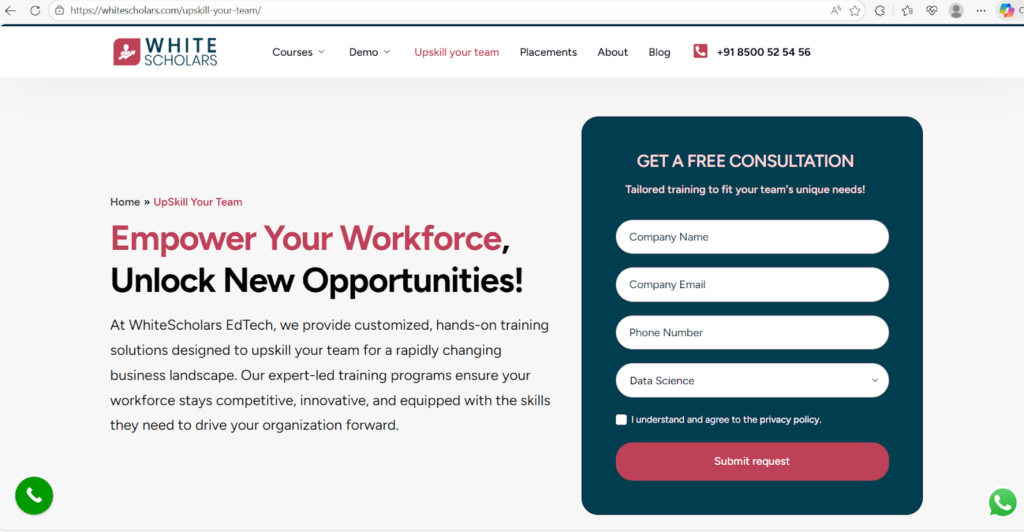
To illustrate the practical application of these digital marketing concepts, consider the White Scholars Training Institute in Hyderabad. As a premier educational entity, this institute can leverage earned media strategies to ensure its training modules for competitive exams or professional certifications appear in AI Search Overviews.
By implementing FAQ Schema on their course pages, addressing common student queries about fee structures, course duration, and faculty expertise, they secured high-visibility real estate in Google’s People Also Ask section.
Furthermore, by utilising paid search and paid social campaigns targeted at the Hyderabad demographic, the institute has driven high-intent traffic to their website.
They then use data analytics to track the student journey from the first click to the final registration, aiming to improve the user experience (UX) and reduce friction in the enrolment process.
Applying these structured data and creative marketing techniques has established the White Scholars Training Institute as a dominant authority in the Hyderabad educational market. White Scholars currently has over 3,200 students enrolled across 600+ batches, supported by 240+ hiring partners and 1,500+ guaranteed internships.
Conclusion: The Future of Authority and Visibility
Adding FAQ schema is a simple hack that potentially increases brand visibility and improves website authority. While it may seem technically daunting, various free tools make it accessible. By focusing on keywords that already rank on page one, businesses can gain an SEO advantage that competitors may lack.
Mastering digital marketing, from SEO and digital PR to paid social and programmatic advertising, requires a synchronous blend of technical precision and creative excellence. Implementing FAQ schema serves as a secret weapon, providing the structure essential for visibility in AI Overviews, voice search, and LLMs.
Ultimately, by utilising the strategies, brands like the White Scholars Training Institute have earned sustainable authority across every digital communication channel.
Frequently Asked questions
1. What is FAQ schema?
It is structured data added to a page’s HTML to help search engines understand frequently asked questions and display them as rich results. This increases brand visibility and website authority by taking up more space in search results.
2. How do I implement FAQ schema on my website?
You can implement it manually using JSON-LD code (recommended by Google) or via plugins that generate the markup for you. Once created, add the code to the header or before the closing body tag and verify it with the Rich Results Test.
3. Does FAQ schema help my content appear in AI Overviews?
Yes, Google’s AI Overviews and other AI-driven platforms pull content directly from FAQ schema to generate responses. It provides Large Language Models (LLMs) with the clarity and context they need to cite your content.
4. What is the difference between FAQ and Q&A schema?
FAQ schema (FAQPage) is for questions and answers written by the site itself with no user contribution. Q&A schema (QAPage) is for forum-style pages where users can submit, answer, and vote on questions.
5. How does FAQ schema assist with voice search?
Voice assistants like Alexa often source answers from featured snippets, and adding structured data increases the likelihood of being featured in these spots. This enhances accessibility and reach for the millions of consumers using smart speakers.