
Digital Marketing Career Guide for Non-Tech Beginners
A simple guide to starting digital marketing in India, covering essential skills, learning path, and career opportunities.
Introduction
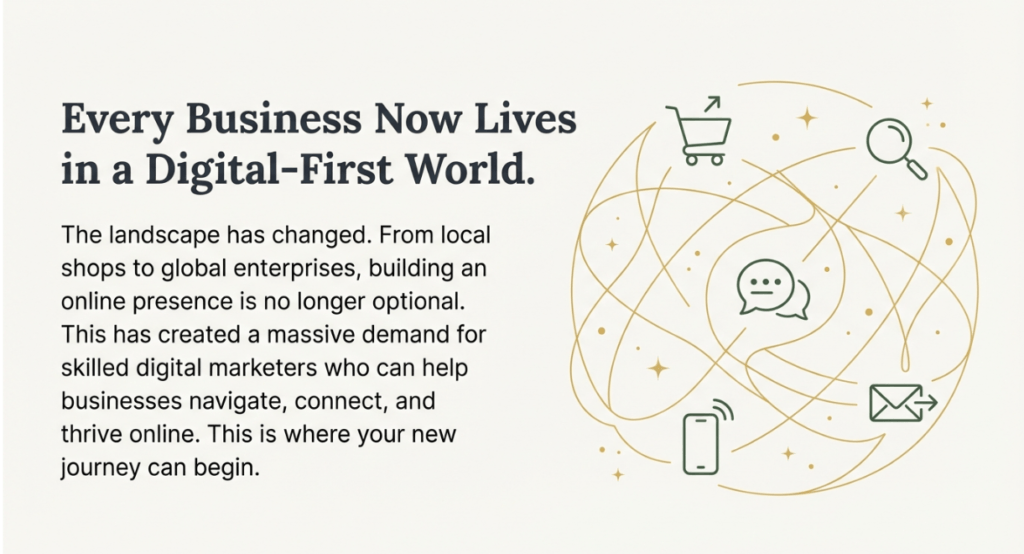
In today’s business world, traditional advertising techniques have been largely replaced by a digital-first strategy. The need for qualified digital marketers has increased dramatically as every company, from small local businesses to multinational corporations, tries to establish a strong online presence.
However, the belief that one must have a technical or coding background to succeed in this field is a common misconception that often discourages potential talent.
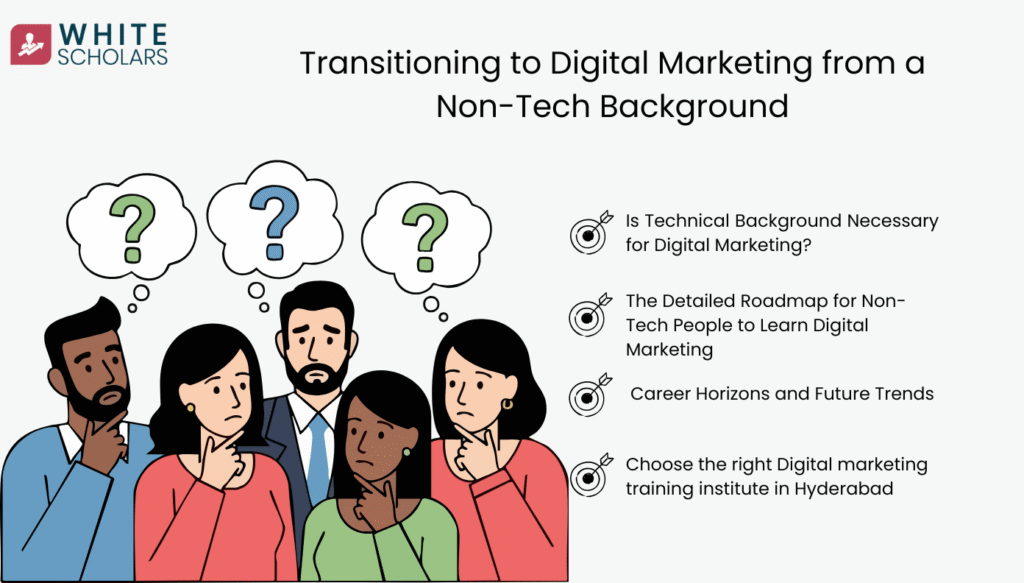
Is a Technical Background Necessary for Digital Marketing?
The clear answer is no. You do not need a technical background to begin a successful career in digital marketing. Whether your previous experience is in business, art, management, or even hospitality, the industry is designed to be accessible to anyone willing to work through the initial learning curve.
Marketing was previously limited to traditional forms, but the digital revolution has enabled a wide range of professionals to engage audiences through channels such as search engines, social media, emails, and mobile applications.
While advanced technical knowledge and programming skills may appear intimidating, they are not required for the vast majority of positions in this industry. Instead of writing code, you’ll learn how digital platforms operate using specialized tools and strategic communication.
Why Everyone Can Easily Adopt Digital Marketing
Digital marketing is arguably one of the most inclusive industries for non-tech professionals because it values a combination of creativity, communication, and strategy, as well as technological literacy. There are several reasons why this field is an ideal fit for people with diverse backgrounds:
- A Creative-First Industry: Much of digital marketing is concerned with branding, storytelling, and developing new campaign concepts. If you have an artistic or managerial mindset, your ability to tell a story will be highly valued.
- Analytical Without the Code: While the field is data-driven, the technical side focuses on analyzing performance data provided by user-friendly tools rather than creating software from the ground up.
- Accessible and User-Friendly Tools: The industry is supported by platforms that are specifically designed to be simple to use. Professional campaigns and graphics can be created using tools such as Google Ads, Meta Business Suite, and Canva without the need for a computer science degree.
- Transferable Soft Skills: The industry values what you can do rather than your specific degree. Professionals in sales, teaching, finance, and hospitality frequently discover that their existing communication, psychology, and management abilities can be directly applied to marketing strategies.
- Cost-Effective Learning: Unlike many technical fields that require expensive hardware or software, you can learn concepts such as Search Engine Optimization (SEO) and organic growth for free.
The Detailed Roadmap for Non-Tech People to Learn Digital Marketing
For those who are ready to make the transition, following a structured roadmap is critical to developing confidence and competence.
Step 1: Identify Your Strengths and Interests
Digital marketing is a broad term with numerous specialized branches. Before diving in, consider whether you prefer creativity or analytics. Key areas to explore include
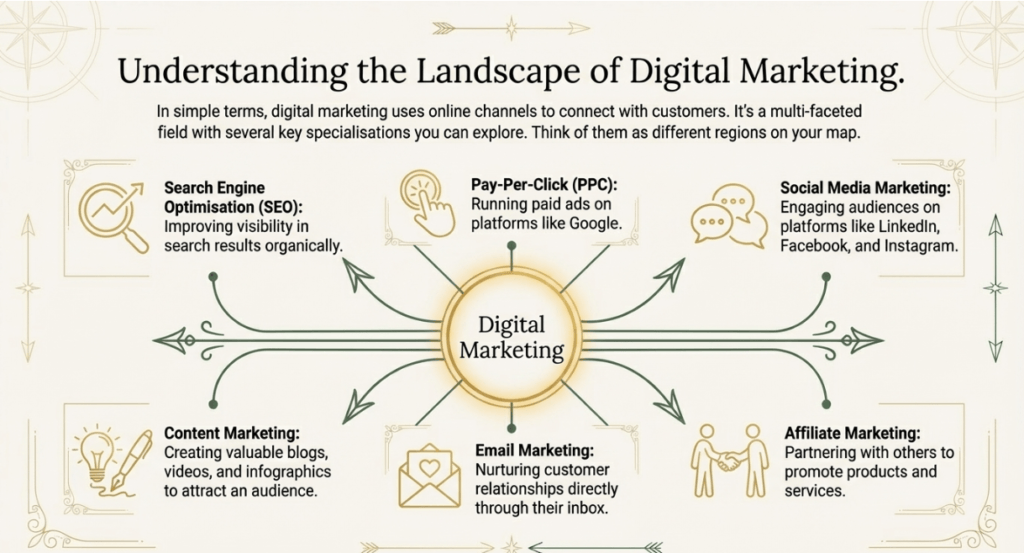
- Social media marketing involves engaging audiences on platforms such as Facebook and Instagram.
- Search Engine Optimization (SEO) is the process of learning how to rank a website on the first page of search results.
- Content marketing entails creating blogs, videos, and infographics to attract attention.
- Performance marketing focuses on paid advertisements with measurable outcomes.
- Email marketing is the process of nurturing leads through direct communication.
Step 2: Learn the Fundamentals
Enrolling in a structured, industry-recognized course is the most effective way to acquire fundamental knowledge. A comprehensive curriculum should include:
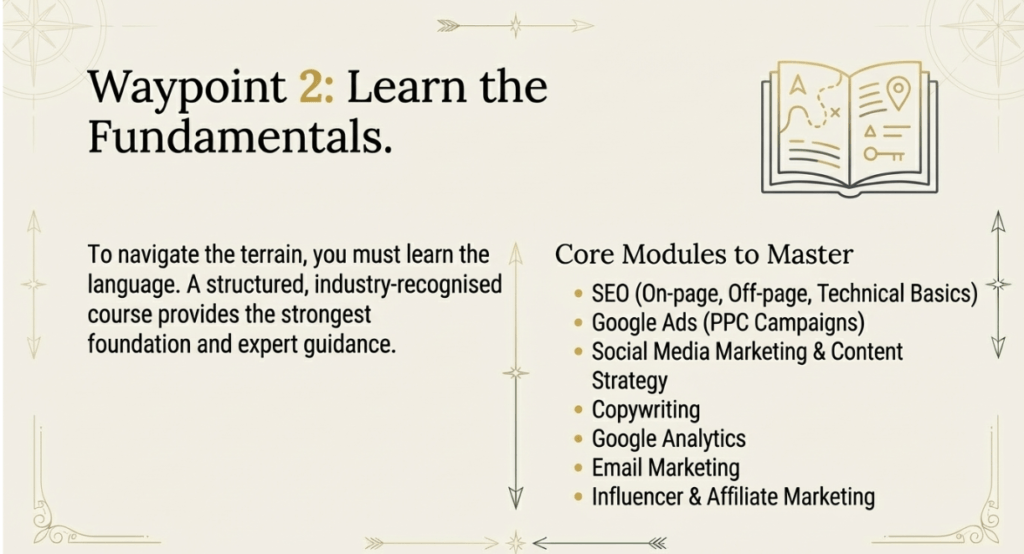
- SEO (On-page and Off-page): Learn about keywords and how to rank your website.
- Google Ads & PPC: Learn how to manage pay-per-click campaigns, which allow you to reach a large audience by paying for top-tier search visibility.
- Social media marketing (SMM) entails using platforms such as LinkedIn, YouTube, and Instagram to promote products.
- Copywriting and Content Strategy: Creating text and plans that promote engagement.
- Specialized Modules: Investigating Affiliate Marketing, in which you promote products through third-party websites for a commission, and Influencer Marketing.
Step 3: Get Hands-on Practice
Digital marketing is a practical skill that cannot be learned solely through theory; you must apply what you learn.
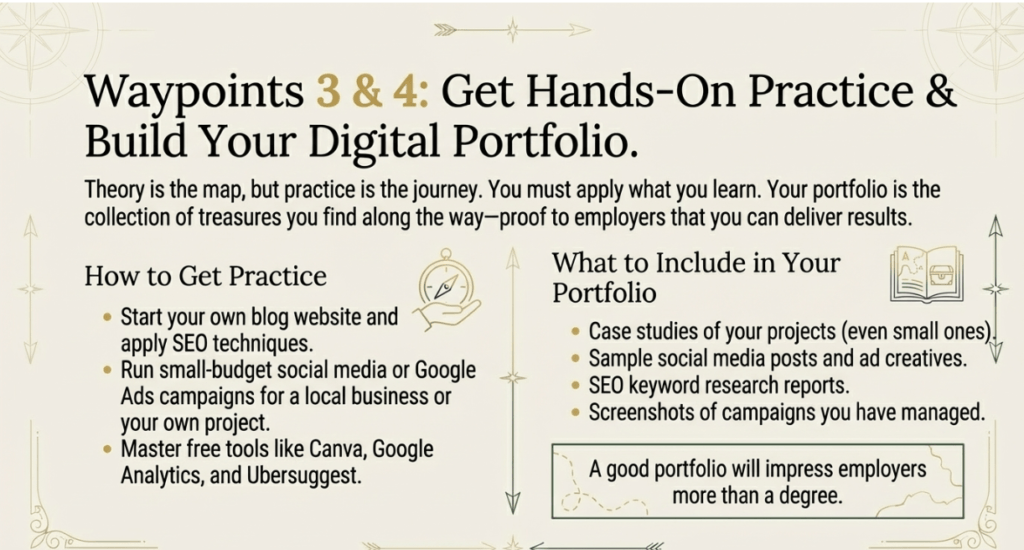
- Start a personal blog and use SEO techniques to see how your traffic increases.
- Launch small social media campaigns for your personal page or a local brand.
- Use free tools like Ubersuggest for keyword research and Google Analytics to track data.
- Run small-budget demo ads to learn about campaign management mechanics.
Step 4: Create a Digital Portfolio
When you don’t have traditional work experience, a portfolio can serve as proof of concept. A strong portfolio should include:
- Case studies for small projects you’ve completed.
- Sample social media posts or ad creatives created with tools such as Canva.
- SEO reports and documentation for keyword research.
- Screenshots from any demo campaigns you’ve managed. A well-designed portfolio frequently impresses employers more than a formal degree.
Step 5: Get Certified
Certifications solidify your professional status and demonstrate to employers that you are committed to your new career. The key certifications to pursue include
- Google Digital Garage and Google Ads certifications.
- Certificates from White Scholars Digital Marketing course in hyderabad( Microsoft and NASSCOM certifications)
- Specialized institutional certifications, such as those from Simplilearn or Victorious Digital, provide live project experience and placement assistance.
Step 6: Start Freelancing or Interning
Once you have mastered the fundamentals, look for ways to put your knowledge to the test in the real world. You could work as a digital marketing intern for a local business or provide freelance services to startups and entrepreneurs.
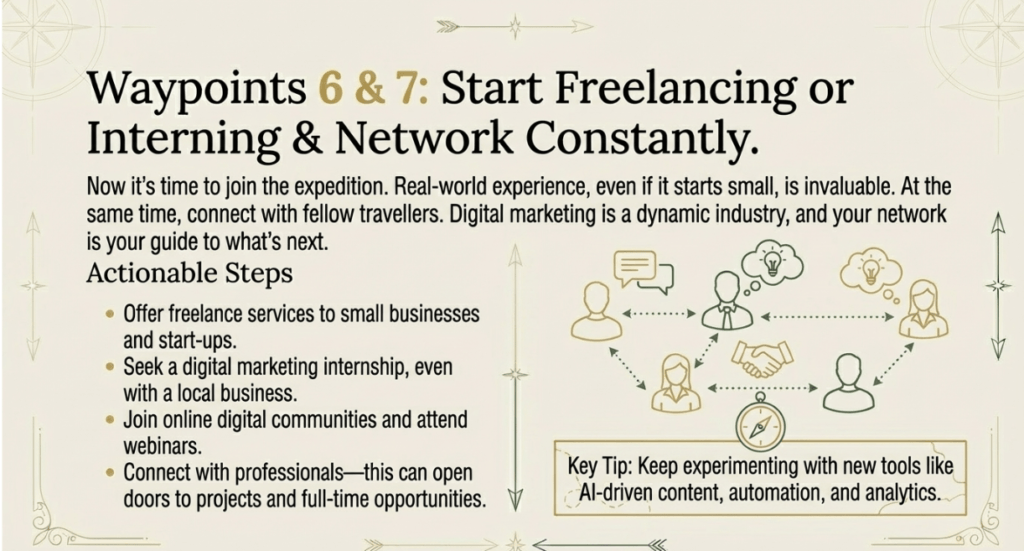
Even if the initial pay is low, the experience gained will be extremely beneficial to your resume.
Step 7: Network and stay updated
Because the digital landscape is constantly changing, you must keep up with the latest trends.
- Join digital communities and attend webinars.
- Attend local workshops and events to connect with other professionals.
- Experiment with AI-powered content and automation tools, which are becoming increasingly important in the industry.
Career Horizons and Future Trends
As we look to the future, the digital marketing landscape is changing with new high-paying roles and strategic platform shifts.
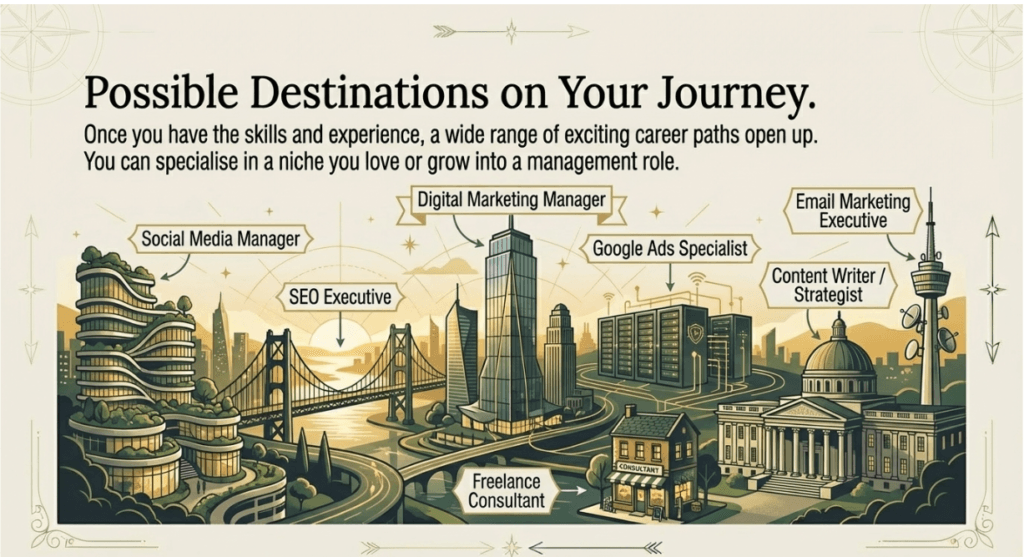
- Emerging Job Roles: In addition to general marketing, you can specialize as an SEO Executive, Social Media Manager, Google Ads Specialist, or Email Marketing Executive. Those with more experience can advance to become digital marketing managers or even start their own agencies.
- Platform Strategy: Selecting the appropriate platform is critical. For example, in 2025, the choice between LinkedIn and Facebook is heavily influenced by whether you are targeting professional B2B audiences or broader consumer demographics.
- Starting salaries in India range from ₹20,000 to ₹35,000 per month, with opportunities for rapid growth based on skills and experience.
- Advanced Skills: To future-proof your career, you must master top-tier skills such as Salesforce Marketing Cloud, automation, and full-stack marketing, which bridges the gap between social media management and deep data analytics.
Three ways for beginners to gain practical marketing experience.
Digital marketing is a practical skill that requires more than just theoretical knowledge; beginners must actively apply what they learn to gain confidence and competence. Here are three specific ways that beginners can gain hands-on marketing experience:
Create a personal blog and apply SEO
One of the most effective ways to practice is to create your own blog site. This allows you to experiment with Search Engine Optimization (SEO) by creating content based on specific search keywords relevant to your intended audience.
Continuous optimization and linking allow you to see firsthand how these techniques improve a website’s position in search engine results pages.
Execute small-scale social media and advertising campaigns
Beginning users should launch small social media campaigns for their own pages or a local brand on platforms such as LinkedIn, Facebook, YouTube, and Instagram. You can also run demo ads on a low budget.
Gives you hands-on experience managing campaigns using tools like Meta Business Suite or Google Ads, as well as creating visual content with simple platforms like Canva.
Consider Internships or Freelance Opportunities
You can put your skills to use by working as a digital marketing intern for a local company or providing freelance services to startups and entrepreneurs.
Even if the initial pay is low, working with friends or small businesses provides invaluable real-world experience that enables you to use data-driven campaigns and innovative strategies in a professional setting.
Getting this experience is important because employers often prefer a documented portfolio of work, such as case studies, SEO reports, and campaign screenshots.
The best digital marketing training Institute in Hyderabad
The WhiteScholars framework is specifically designed for non-technical individuals who want to learn digital marketing in Hyderabad. Their mission is to provide students with personalized, hands-on training that will help them overcome professional challenges and achieve real-world success.
Their digital marketing classes in Hyderabad for non-tech students include expert mentorship (8-10+ years of experience) and 180 hours of learning, ensuring that acquired skills are relevant and immediately applicable.
Most importantly, the job-ready model guarantees interview opportunities for students pursuing digital marketing training in Hyderabad, as validated by Microsoft and NASSCOM certifications.
Final Thought
Transitioning from a non-technical background to digital marketing is definitely possible, and it is also a strategic career move in an increasingly online world. The industry does not require a specific degree or prior knowledge of coding; rather, it seeks those who are curious, creative, and consistent.
Non-tech professionals can make the transition to digital marketing by following a seven-step roadmap. First, identify your creative or analytical strengths. Second, take structured courses in SEO and PPC to learn the fundamentals. Third, get hands-on experience by creating a blog or running small social media campaigns.
Fourth, create a digital portfolio that includes case studies and keyword reports. Fifth, obtain certifications from Google or Meta to demonstrate your expertise. Sixth, pursue internships or freelance work to gain valuable experience. Finally, network and keep up with evolving trends such as AI. This industry values skills over degrees.
Frequently asked questions
1. Do I have to learn coding to work in digital marketing?
No, most digital marketing roles do not require any coding knowledge. Most positions require only a basic understanding of HTML or WordPress. Instead of programming, you’ll concentrate on using specialized tools and strategic communication.
2. What are the best career options for someone with a non-tech background?
Non-technical individuals can consider positions such as social media manager or content strategist. Other viable options include becoming an SEO Executive, Google Ads Specialist, or Email Marketing Executive.
These positions emphasize creative storytelling and analytical strategy over technical software development. With experience, you can advance to digital marketing manager or start your own agency.
3. Why is digital marketing considered appropriate for non-technical professionals?
The industry is a perfect fit because it prioritizes creativity, communication, and strategy in addition to technology. Many essential platforms, such as Canva and Meta Business Suite, are designed to be user-friendly.
Existing soft skills in sales, education, finance, and hospitality are easily transferable. Employers in this sector frequently value practical skills and outcomes over a specific technical degree.
4. What should I include in my digital marketing portfolio if I have no prior experience?
You should include case studies for small projects as well as samples of social media posts or ad creatives. Including SEO reports and keyword research demonstrates your ability to manage data-driven tasks.
Employers will appreciate having visual proof of your practical experience, so include screenshots of managed campaigns. A well-designed portfolio is frequently more appealing to recruiters than a formal academic degree.
5. Is it too late to transition from a non-digital marketing career?
It is never too late to become a successful marketer, as many have done after years in completely different fields. The industry is based on a manageable learning curve that accommodates a wide range of professional backgrounds.
Continuous learning and keeping up with new tools like AI are the primary keys to long-term success. Ultimately, what matters most is having the courage to begin and the consistency to improve your abilities.