

How to Develop a Successful Social Media Marketing Framework
Social media marketing requires strategic approaches to reach the right audience. Let’s take a look at how to create successful social media marketing.
Defining the Core of Social Media Marketing and What’s Next
Social media marketing is a strategic approach that utilizes digital platforms like Facebook, Instagram, X (formerly Twitter), LinkedIn, and TikTok to connect with a wider audience, promote products or services, and build a brand. It is an essential component of a small business marketing strategy, requiring a robust plan to meet customer expectations for engaging content and direct communication via messaging and comments.
Unlike traditional online advertising, which can occasionally alienate consumers, social media allows for meaningful interaction through educational content, thought leadership, and relevant conversations.
This marketing method serves several functions: it humanizes a brand, drives traffic to a business website, and facilitates lead generation and sales. Furthermore, it has become a vital tool for customer service, allowing businesses to resolve issues and answer questions in real time.
Whether through organic reach, which involves building a presence without paid aid, or social media advertising, which uses budgets to expand reach, this field is defined by its ability to reach customers on the go and across multiple channels.
The rise of AI has created a huge opportunity for more social media marketing jobs. Audiences are no longer interested in watching hours and hours of content; instead, people watch reels and shorts on Instagram and YouTube, which only consume about 30 sec of their time.
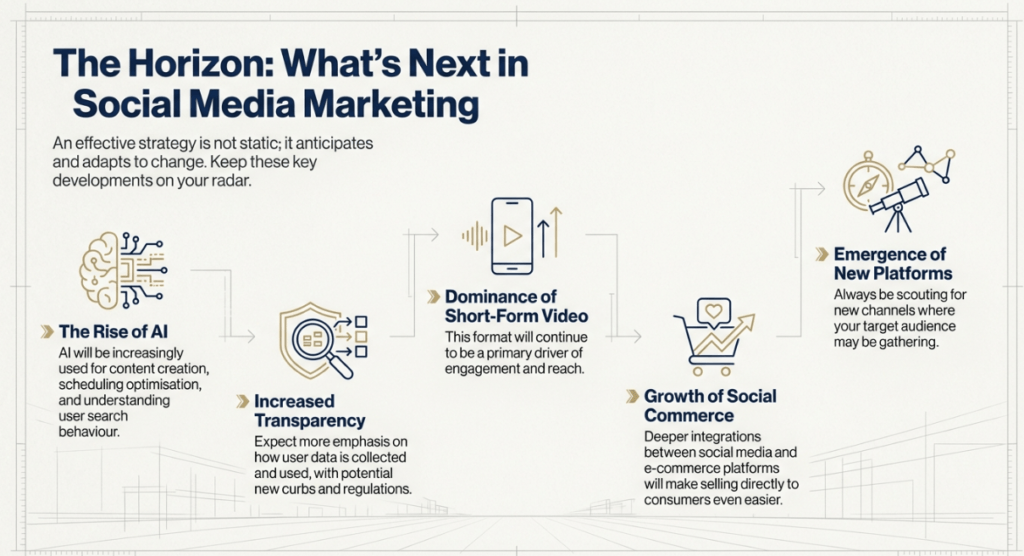
There are high chances of integrating social media and e-commerce platforms. This will lead to the emergence of new platforms and channels for social media marketing.
The Advantages of Digital Social Engagement
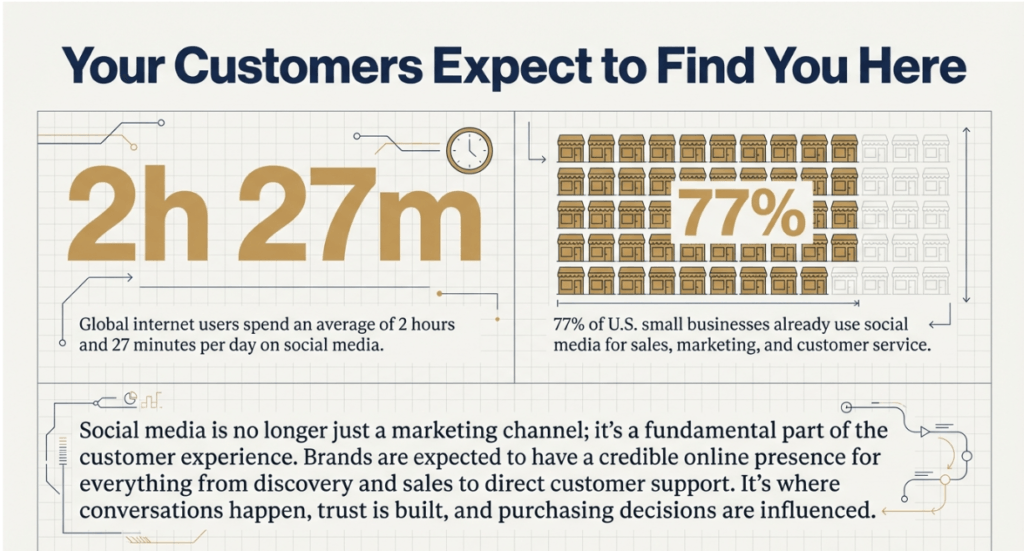
Roughly 77% of small businesses in the U.S. use social media for marketing, sales, and support. By the end of 2025, around 70–75% of businesses in India are actively using social media marketing as part of their digital strategy. This reflects the rapid adoption of platforms such as YouTube, Facebook, and Instagram, which collectively serve hundreds of millions of Indian users.
The benefits are extensive:
- Economic Reach: Social media is a low-cost solution; organic posting only takes time, whereas paid advertisements on platforms such as Facebook can be launched with budgets as low as $1.00 per day.
- Enhanced Brand Perception: Developing quality content attracts a broader audience and builds brand awareness. It allows businesses to demonstrate their values through behind-the-scenes footage or user-generated content (UGC), which fosters trustworthiness.
- Strengthened Credibility: A consistent online presence acts as social proof, making a business appear more dependable and established. Earning a verified blue badge can further accelerate this trust.
- Lead and Sales Growth: Social selling is highly effective; approximately 78% of social sellers outperform peers who do not use these platforms.
- Real-Time Support: Users now expect companies to be present on social channels for customer service. Handling requests via direct message results in a faster response, which improves the overall customer experience.
- Traffic Generation: Effective strategies drive followers back to a central website where they can complete actions like making purchases or filling out forms.
Potential Hurdles in the Social Space
While impactful, social media marketing presents specific challenges that businesses must navigate:
- Platform Saturation: With so many brands creating content, it’s difficult to stand out in the content landscape.
- Algorithmic Shifts: Platforms frequently change the rules governing what content is displayed, requiring a complete rethinking of a business strategy without warning.
- Restricted Organic Visibility: Platforms often control organic reach, sometimes requiring businesses to use paid promotion to see a significant impact.
- Resource Intensity: Managing accounts well requires significant time for content creation, scheduling, and tracking engagement data.
- Risk of Negative Feedback: As public forums, social media can expose a brand to negative comments that must be handled quickly to protect the business’s reputation.
- Data Security: Privacy is a major concern because platforms collect large amounts of user data, which can be compromised during a security breach.
A Breakdown of Primary Social Platforms
Choosing the right platform is determined by where a specific audience is active and the type of content being shared.
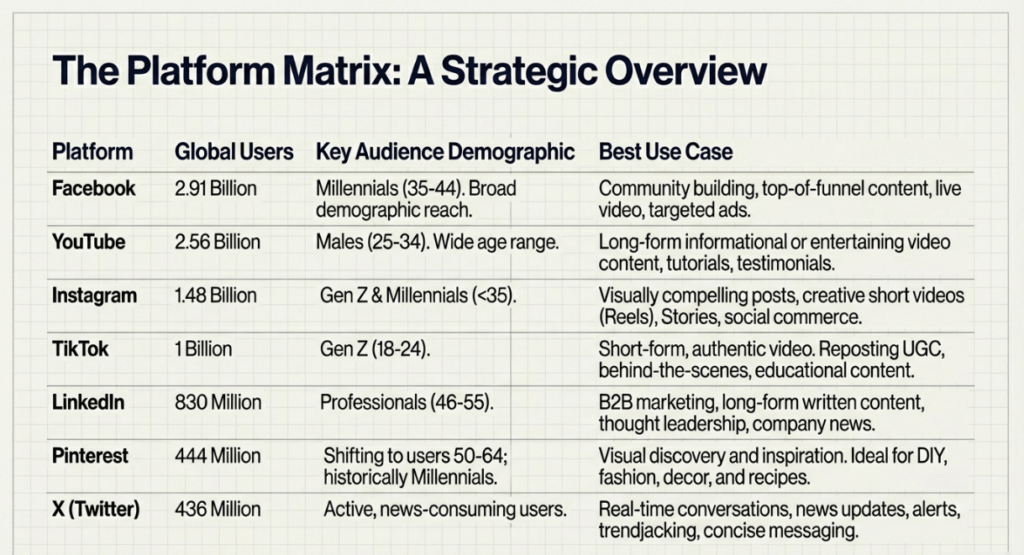
- Facebook (2.91 Billion Users): Primarily targets Millennials (ages 35–44). It is excellent for top-of-funnel professional content, video streaming, and one-on-one interaction through messaging.
- YouTube (2.56 Billion Users): The largest audience is males aged 25–34. It is the premier platform for long-form informational content, tutorials, and customer testimonials that build authority.
- Instagram (1.48 Billion Users): A highly visual platform where 71% of users are under 35. It supports creative short videos (Reels), Stories, and shoppable posts for direct e-commerce.
- TikTok (1 Billion Users): Ideal for targeting Gen Z (ages 18–24). It thrives on short-format, entertaining, and authentic videos, such as behind-the-scenes footage or humorous brand content.
- LinkedIn (830 Million Users): A professional network popular with users aged 46–55. It is best for B2B marketing, long-form written content, and thought leadership.
- Snapchat (557 Million Users): Focuses on ages 18–24 with an emphasis on authenticity and unpolished, eye-level content.
- Pinterest (444 Million Users): Shifting towards an older demographic (ages 50–64). It is a visual discovery tool used for inspiration in fashion, decor, and DIY guides.
- X / Twitter (436 Million Users): Best for real-time news, alerts, and “trendjacking”—using trending topics or memes to connect with an audience.
The Mechanics of Content Visibility (Algorithms)
Platforms use algorithms to decide which content a user sees, generally categorized into two types:
- Passive Algorithms: These work based on a user’s past activity, such as which accounts they follow and how much time they spend on specific content.
- Active Algorithms: These rely on direct user input, such as likes, shares, or comments, to refine what is shown in the future.
Most platforms use a combination of both to determine which posts are worthy of appearing in various newsfeeds.
Constructing a Robust Marketing Strategy
A successful strategy requires a structured approach to ensure that resources are used efficiently.
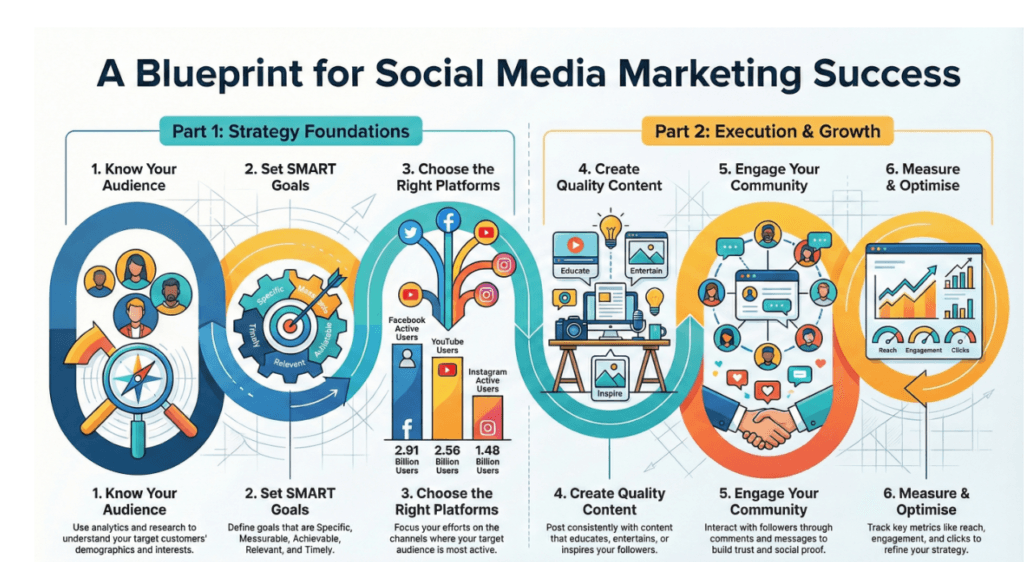
1. Understanding the Target Market
Businesses must identify their audience based on data such as age, location, and engagement patterns. This can be achieved through:
- CRM Data: Software that stores and sorts existing customer information.
- Platform Analytics: Free tools on business accounts that reveal when and where followers post.
- Competitor Research: Observing competitors to identify gaps in their strategies and learn how to talk to the audience.
- Personas: Creating segments to identify unique audience needs.
2. Setting SMART Objectives
To guide efforts, goals should follow the SMART framework:
- Specific: Clear about what is to be achieved (e.g, increase followers by 20%).
- Measurable: Using metrics to definitively track progress.
- Achievable: Goals must be within reach to avoid discouraging the team.
- Relevant: Laddering up to larger business objectives, such as building brand awareness.
- Timely: Having a specific deadline or cadence for check-ins.
3. Strategic Resource Allocation
Social media management requires specific skills like strategic thinking, branding expertise, and organization. If a budget allows, hiring an expert is recommended; otherwise, investing in social advertisements can boost reach.
4. Content Excellence and Consistency
Success is a matter of posting compelling, engaging content regularly. This shows the audience the business is dependable and knowledgeable. It is preferable to prioritize quality over quantity; posting too many low-quality posts can result in an account being flagged as spam.
5. Engagement and Interaction
Brands should aim for at least one hour a day to communicate with their audience. This can include:
- Creating Facebook groups.
- For discussions, we are using Instagram Live.
- Using GIFs and emojis to personalize messages.
- Conversations are monitored in real time so that concerns can be addressed promptly.
6. Measure and optimise
Effective measurement involves using free platform analytics and KPIs, such as reach and engagement, to definitively track progress against SMART objectives.
Regularly reviewing this data allows you to optimise campaigns and pivot your strategy by testing different content types if performance levels are not meeting your goals
Content Ideas and Best Practices
Businesses can engage followers through a variety of content types:
- Educational: Tutorials, “how-to” guides, and industry news.
- Inspirational: Quotes, customer spotlights, and success stories.
- Behind-the-Scenes: Introducing employees and showing the production process.
- Interactive: Contests, giveaways, polls, and unboxing videos.
- Visual Assets: Infographics, high-quality images, and short videos.
- Collaboration with industry leaders can help to build trust and increase sales because influencers are perceived as real people.
- Livestreaming: This taps into the Fear Of Missing Out (FOMO) and builds trust by providing a personal look at the business.
Maintaining Brand Identity and Professionalism
All marketing, whether print or digital, must be consistent. Key considerations include:
- Brand Voice: A consistent way of talking to customers.
- Visual Consistency: Using similar visuals on all platforms.
- Social Media Policy: If multiple staff members handle accounts, a policy should outline expectations for posts, how to handle negative feedback, and security protocols.
Evaluation and Measurement of Performance
Tracking results is critical for determining whether goals are met. Important Key Performance Indicators (KPIs) include:
- Reach/Impressions: How many people saw the content.
- Engagement: The percentage of people who interacted with the post.
- Clicks: How many users were driven to a website or landing page.
- Mentions/Tags: How often the brand is referenced by others.
- Video Views and Saves: Indicators of how valuable the content was to the audience.
The Future Landscape and Tools
The field is rapidly evolving, with several trends on the horizon:
- AI Integration: AI is increasingly used for content creation, scheduling, and understanding user consumption patterns.
- Social Commerce: Greater integration between social platforms and e-commerce for direct selling.
- Video Dominance: Continued growth of short-form video content.
- Transparency: Increased focus on how user data is collected and used.
Professionals can stay up-to-date by using resources such as Google Play, the Mac App Store, or specialized training like Facebook Blueprint, Hootsuite Academy, and LinkedIn Learning.
Integrated Services and Support
Both Mailchimp and Wix offer tools to streamline these processes. Mailchimp provides SMS marketing to reach customers on every device, marketing automation, and content creation tools for targeted ads. Wix offers AI website builders, logo makers, and SEO tools to help grow an online presence.
Both platforms enable businesses to hire a specialist for personalised onboarding and professional support. A good strategy ensures that you are not only shouting into the crowd, but also creating a community of people who want to use your services.
Advancing Expertise through Professional Development
To remain competitive in the fast-paced digital landscape, it is vital to engage in continuous learning. Several high-level resources are required to stay updated on new formats and tools.
- Professional Certifications: You can earn digital marketing certificates through platforms such as Hootsuite Academy, Twitter Flight School (for marketing leadership), LinkedIn Learning, and Facebook’s Blueprint Certification.
- Industry Literature: Key texts include Crushing It by Gary Vaynerchuk and The New Rules of Marketing & PR by David Meerman Scott, which explores newsjacking, AI, and live video.
- Audio Insights: Engaging with podcasts like The GaryVee Audio Experience, the Social Pros Podcast, and the Savvy Social Podcast can provide ongoing strategic advice.
What topics are covered in social media marketing at White Scholar’s digital marketing course in Hyderabad?
WhiteScholars Academy provides industry-validated credentials, including Microsoft and NASSCOM certifications, alongside an official Digital Marketing Certification and an internship certificate in Hyderabad.
Teaching Social Media Marketing (SMM) involves an intensive, 180-hour practical framework where students launch live campaigns for partnered brands like Country Delight and Blinkit. The curriculum covers major platforms (Facebook, Instagram, LinkedIn, and YouTube), focusing on algorithms, content calendars, and engagement strategies.
Specific platform training includes:
- Facebook & Instagram: Mastering Meta Ads, Facebook Pixel, and influencer marketing through authentic storytelling.
- LinkedIn: Building personal branding and using AI tools for profile optimization and lead generation.
- YouTube: Focusing on SEO (on-page and off-page), search ranking factors, and creating high-quality thumbnails via Canva.
In digital marketing classes, students manage real-world decisions involving audience targeting and budget allocation, ensuring they can maximize ROI for future employers. This project-based learning in Hyderabad, which includes building a comprehensive strategy for a digital marketing community, ensures learners transition seamlessly into professional roles like social media manager.
Tactical Audience Research and Social Listening
Beyond basic demographics, a deep dive into audience behavior is required to ensure content resonates.
- Segmented Personas: Creating detailed personas helps identify unique segments within a broader audience.
- Hashtag and Niche Analysis: Monitoring relevant hashtags and researching trending sounds or topics within your specific niche allows you to align with current conversations.
- Social Listening: This involves observing competitor accounts, their followers, and their tags to identify gaps in the market and understand user needs.
- CRM Integration: Using Customer Relationship Management (CRM) software allows you to store and sort existing data on ages, locations, and engagement patterns, making it easier to put research into action.
Synchronising Social with Multichannel Marketing
Social media should not exist in isolation; it is most effective when part of a larger digital ecosystem.
- SMS Marketing: By incorporating personalised SMS messages into your strategy, you can reach customers on the go, as well as automate campaigns and track direct engagement.
- Email and Web Synergy: Social media acts as a free tool to drive traffic to a branded website or blog, where leads can be nurtured further. For example, a business might promote growth-focused articles on LinkedIn while sharing design trends on Instagram to meet the specific interests of followers on those different platforms.
Governance, Security, and Risk Management
Because social media is a public forum, businesses must be prepared to face negative publicity and security risks.
- Formal Social Media Policies: A standard policy should provide clear expectations for staff, including security protocols and platform-specific laws.
- Crisis Response: Instructions on how to respond to negative posts are essential to prevent lasting reputational damage.
- Data Privacy: Businesses must be mindful of privacy concerns, as platforms collect massive amounts of user data that could be compromised during a security breach.
- Buzz Monitoring: Actively managing your online reputation through buzz monitoring allows you to address negative engagement as soon as it occurs.
Final Thoughts
Social media marketing has transitioned from a trend to a strategic necessity for establishing brand credibility and humanizing businesses. While challenges such as changing algorithms and content saturation exist, they can be overcome with consistent, high-quality engagement and data-driven insights.
Companies can effectively target their ideal audience by using SMART objectives in conjunction with advanced tools such as AI and marketing automation. Ultimately, a well-executed plan across multiple platforms creates a cohesive brand identity that drives traffic, leads, and long-term customer loyalty.
Frequently asked Questions
1. What is social media marketing, and why does my company need it?
Social media marketing involves using platforms like Facebook, Instagram, and TikTok to brand and promote products while connecting with a wider audience. It is vital because it humanizes your brand, drives traffic to your website, and meets the modern customer expectation for direct communication via messaging. By sharing quality content, even small businesses can reach more people inexpensively and effectively.
2. Which social media platforms should I choose for my business?
You should focus on platforms where your target audience is most active and where your specific content type performs best. For instance, Facebook is excellent for targeting Millennials with professional content, while TikTok is ideal for reaching Gen Z through authentic, short-form video. LinkedIn is the premier choice for professional B2B marketing and establishing thought leadership.
3. How do social media algorithms decide what my followers see?
Algorithms typically function in two ways: passively and actively, with both aiming to influence which content is displayed to a user. Passive algorithms track a user’s past engagement history and time spent on the platform, while active algorithms rely on direct inputs like likes or shares. Most platforms use a combination of both to refine and determine which posts appear in newsfeeds.
4. What are the main benefits of implementing a social strategy?
Key advantages include increased brand awareness and building trustworthiness through authentic, behind-the-scenes content and social proof. It is a cost-effective method for lead generation, with social sellers often outperforming those who do not use these platforms. Furthermore, it allows for real-time customer support, helping you resolve issues quickly and improve the customer experience.
5. How do I create a successful social media marketing strategy?
First, you must research your audience and set SMART goals: Specific, Measurable, Achievable, Relevant, and Timely. You should then create engaging, original content and use a calendar to ensure you are posting consistently. Finally, in order to optimize your future efforts, you must regularly measure your results using key performance indicators such as engagement and reach.