

Impact Of Influencer And Affiliate Marketing On Digital Marketing
Let’s look at the impact of influencer and affiliate marketing on digital marketing and how they can help businesses succeed.
Understanding Influencer Marketing and Affiliate Marketing
Influencer marketing is a strategy where a company builds a relationship with an individual who has a dedicated following and significant influence over a specific audience. This strategy is primarily concerned with developing long-term relationships in order to boost brand loyalty.
It serves as a tool for gaining social proof, ramping up engagement, and establishing a brand as credible and authentic. The goal is often for the influencer to share the brand with their audience, creating a connection that feels organic rather than purely transactional.
On the other hand, affiliate marketing is a performance-based system where an individual earns money by promoting a company’s products or services. These marketers share a special link online, and if a customer makes a purchase through that link, the affiliate receives a commission.
It is a straightforward method for companies to increase sales and for individuals to monetize their recommendations. Unlike traditional influencer marketing, which focuses on raising awareness, affiliate marketing is specifically designed to acquire new customers through direct conversions.
Data and Market Trends
The adoption of these strategies is widespread across the global business landscape. 81% of brands globally have already embraced affiliate programmes, highlighting them as a standard industry practice.
The financial potential for individuals in this space is significant; for example, successful creators can earn over $50,000 a month solely through affiliate marketing. Individual accounts show even higher earning potentials, with some reports of bringing in $40,000 and $24,000 from different affiliate accounts within just 30 days.
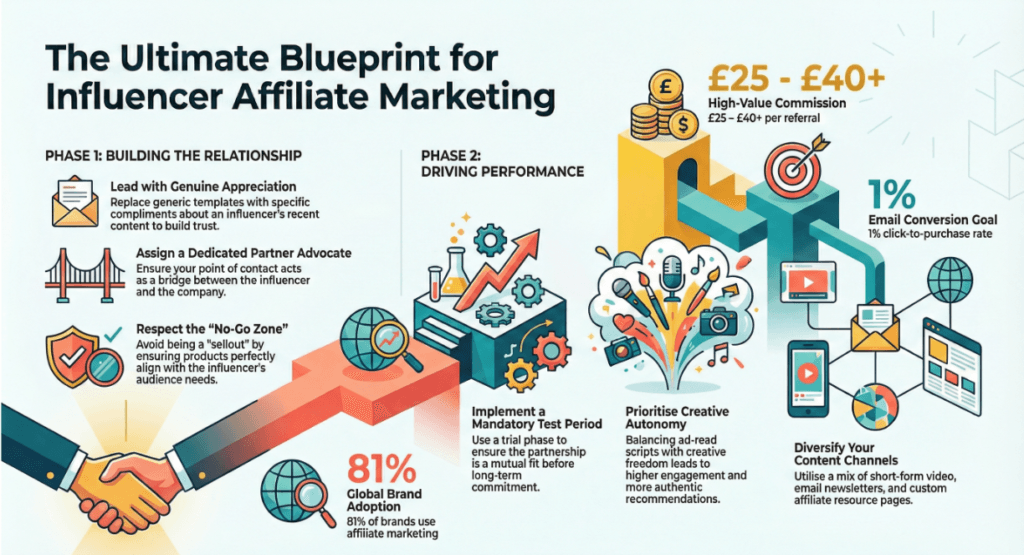
High-paying affiliate links in niches like business or personal finance can offer $30 to $50 per referral, or sometimes even more as a creator scales their content. Furthermore, established content creators can reach income levels of over $150,000 per month by diversifying their strategies across multiple platforms and products.
Differences Between Influencer and Affiliate Marketing
While both methods utilize brand ambassadors, their strategic objectives differ. Influencer marketing is focused on increasing brand loyalty and establishing a long-term presence in the minds of the audience. It involves managing the “behind the scenes” relationship between the company, the influencer, and the audience to ensure it is lucrative for the long term.
Affiliate marketing, by contrast, focuses on the immediate act of gaining new customers. It is highly transactional, relying on the tracking of specific links to trigger payments. While an influencer may receive a flat fee for a post regardless of sales, an affiliate is typically compensated only when a conversion occurs.
Another distinction lies in the assumed expense to the creator. In influencer marketing, every overtly sponsored video has a “relationship cost” with the audience; if a product does not fit, the influencer risks being perceived as a sell-out.
Affiliate marketing can sometimes be more subtle, integrated into resource pages or blog posts, but it still requires the creator to think like a content creator rather than just a salesperson to remain effective.
Combining Both for a Successful Business
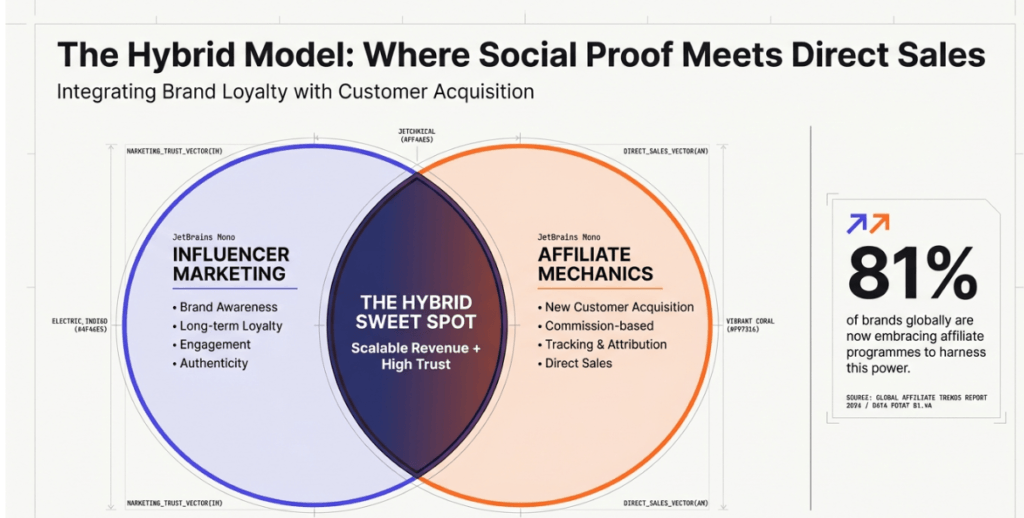
The most effective modern approach is influencer affiliate marketing, which integrates the strengths of both models. Combining these methods allows a brand to gain the social proof and authenticity of an influencer while also benefiting from trackable conversions provided by an affiliate program.
One key to this combination is shifting the mindset from being just a marketer to being a content creator. This involves building a personal or faceless brand on platforms like TikTok, Instagram, or YouTube to drive traffic to affiliate links.
Combining these areas helps a business build loyalty with great content while rewarding the influencer with commissions, benefiting both sides.
Implementing a Business Based on Influencer and Affiliate Marketing Successfully
To build a business successfully using these strategies, one must follow a structured process that balances content creation with technical setup and relationship management.
1. Define the Brand and Niche
The first step is deciding between a personal brand or a faceless brand. A personal brand often builds more trust, but both can be profitable. Next, you must pick a niche that addresses a specific problem or fulfils a need, such as fitness, personal finance, or cooking. It is vital to brainstorm topics you are passionate about to ensure long-term consistency.
2. Select High-Paying Affiliate Links
It is critical to conduct thorough research on the appropriate affiliate programmes. Platforms like Impact.com, Clickbank.com, and Amazon Associates are excellent starting points for finding products. Aim for links that pay at least $30 to $50 per referral to boost income as you scale.
3. Establish a Social Media Presence
A successful business must be where the audience is. Creating accounts on TikTok, Instagram, Pinterest, and YouTube with consistent branding (same username, profile picture, and bio) is essential.
Different platforms serve different purposes: TikTok and Instagram Reels are great for attention-grabbing short content, while YouTube allows for long-form videos that provide deep value and build a loyal audience.
4. Content Creation Strategy
To keep the audience engaged, study successful creators in your niche and use their top-performing videos as inspiration for your own unique twist.
You can also use AI tools like ChatGPT or Claude to generate content ideas or use software like Invideo AI to create faceless videos based on detailed prompts. For those showing their face, recording directly on a phone and editing with apps like CapCut is a proven way to start.
5. Building a Custom Website
A custom website is non-negotiable for building trust and capturing emails. Using an all-in-one solution like Hostinger with an AI website builder can get a site up and running in under a minute.
This site should include a resource page where all affiliate links are organized for the audience to access easily.
6. Launching an Email Newsletter
An email newsletter is a powerful tool because you own your audience regardless of social media algorithms. Using tools like Omnisend, you can provide weekly value and naturally include affiliate links in your suggestions. Even a small conversion rate from a dedicated list can result in significant sales.
7. Managing Influencer Relationships (For Brands)
If you are the company reaching out to influencers, make sure you are pleasant to work with. This means having a point of contact who shows genuine appreciation for the influencer’s work rather than sending generic emails.
Providing creative freedom is also important; while you want to provide parameters, avoiding “influencer anarchy” and finding a middle ground allows for the best content.
8. Testing and Scaling
Before committing to long-term agreements, conduct a test period with influencers or products to see if the partnership is a good fit. For influencers, this might involve using a product in their everyday life to see if it truly provides value to their audience.
Once a partnership has been established, expand it by providing insider groups, bonuses, or additional support to the most successful collaborators.
Advanced Partnership Tactics
To truly stand out, businesses should give their partners the red carpet treatment. This involves comboing benefits, such as offering a base compensation alongside a bonus system for traffic generated. Successful companies often create insider groups where top-tier influencers get extra support or direct access to the brand team.
Another important factor to consider is streamlining the process for influencers; the easier it is for them to work with you, by providing clear briefs and removing technical barriers, the more likely they are to engage. Furthermore, providing industry-standard wording or tips from previous successful integrations can help new influencers convert their audience more effectively.
Finally, expanding the affiliate program is a game changer. Instead of relying on one or two affiliates, a brand can expand to include multiple creators from various niches, allowing it to reach entirely new audiences. Using Influencer Relationship Management (IRM) software can help manage these multiple partnerships efficiently, keeping the entire team in the loop.
You can master all the advanced tactics that are required in developing a successful business from scratch, which are practically taught with real-life examples at the White Scholars Digital Marketing Course in Hyderabad.
Tracking and Performance Metrics
A professional influencer affiliate strategy must be constantly monitored to ensure that the content is effective. This involves:
- Measuring Effectiveness: Tracking whether content is generating engagement or actual conversions.
- IRM Software: Using Influencer Relationship Management (IRM) software to track the progress of a collaboration and keep the entire team informed.
- Diversification: Expanding the program to include multiple content creators from different niches to tap into new audiences.
By implementing these additional layers, managing relationship costs, professionalizing the advocate role, and leveraging automation, a business can move from a simple affiliate setup to a robust, scalable marketing powerhouse.
Final Thoughts
Success in the modern digital landscape requires a strategic shift from being a mere marketer to a dedicated content creator. While 81% of brands now use affiliate programs, the top earners are those who establish trust and social proof through genuine influencer relationships.
The distinction is vital: affiliate marketing focuses on gaining new customers, whereas influencer marketing is about fostering long-term loyalty. To truly excel, businesses must prioritise the human element by ensuring that points of contact express genuine appreciation for partners, lowering the perceived “relationship cost” and preventing influencers from being perceived as selling out.
Technically, owning your audience through a custom website and an email newsletter remains the most important step for long-term security, as these assets are not subject to unpredictable algorithm changes.
Ultimately, combining the performance-based incentives of affiliate links with the creative freedom and advocacy of influencer partnerships creates a robust, scalable business. By using automation tools and relationship management software, creators and brands can move beyond transactional deals to build a highly lucrative and sustainable digital presence.
Frequently asked Questions
1. What is the primary difference between influencer and affiliate marketing?
Affiliate marketing is a performance-based system designed to gain new customers through trackable links that trigger commissions. In contrast, regular influencer marketing focuses on fostering long-term relationships and building brand loyalty. By integrating both, brands can gain social proof and authenticity while simultaneously driving direct sales.
2. How can businesses prevent influencers from feeling like “sell-outs” when promoting products?
Influencers fear a high relationship cost with their audience, where overtly sponsored content makes them appear insincere. To mitigate this, brands should ensure a strong product-audience fit, as the cost to the influencer decreases when the product genuinely matches their followers’ needs. Providing creative freedom instead of strict, scripted ad reads also helps the promotion feel more organic.
3. Which platforms and content strategies are most effective for driving affiliate conversions?
Establishing a presence on TikTok, Instagram, Pinterest, and YouTube is essential for reaching diverse audiences. While short-form content on TikTok provides quick traction, long-form YouTube videos often attract a more loyal audience that is more likely to buy. Success requires a shift in mindset from being just a marketer to becoming a content creator who provides genuine value.
4. Why are a custom website and an email newsletter considered essential for these marketing models?
A custom website fosters trust and functions as a central hub for organizing all affiliate links on a dedicated resource page. An email newsletter is even more critical because it allows you to own your audience independently of social media algorithms. Tools like Hostinger and Omnisend can automate these processes, allowing you to provide weekly value and consistent product recommendations.
5. What is the best way for a company to initiate a successful partnership with a new influencer?
The company’s point of contact should demonstrate genuine appreciation by referencing specific past content rather than sending generic outreach templates. They must act as an advocate or interpreter for the influencer, making the business side as streamlined and simple as possible. Starting with a test period or a limited number of content pieces helps both parties determine if the relationship is a good long-term fit.