

Journey from Data Newbie to Freelance Data Analyst in 2026

Become a freelance data analyst in 2026. Learn Excel, SQL, Power BI, and Python, build real projects, and start landing high-paying clients.
Introduction
Did you know that over 90% of the world’s data has been created in the past few years alone? Every click, purchase, and online activity gives valuable information. As per industry reports, the requirement for data analysts is expected to rise by over 25% in the coming years, making it one of the fastest-growing professions in the world. Freelancing has also seen a major rise, with millions of professionals opting for flexible, project-based work arrangements rather than traditional employment.
This has opened up tremendous opportunities for freelance data analysts. Organizations today require experts who can analyze data and assist them in making better decisions. In this blog, freelancing as a data analyst is explained in simple terms, including opportunities, skills required, finding clients, and how to succeed as a freelance data analyst.
The Surge in Demand for Data Analysts
The demand for data analysts has increased rapidly in recent years. This is mainly because businesses are generating more data than ever before. Every time someone shops online, watches a video, or visits a website, data is created. Companies need data analysts to understand this information and make better decisions.
Some key reasons for this growing demand include:
- Businesses rely on data to improve products and services
- Companies use data to understand customer behavior
- Organizations want to reduce risks and increase profits
- Digital transformation has increased the need for data analysis
According to industry reports, the global data analytics market is expected to reach over $650 billion by 2029. This shows how important data analysts have become across all industries.
Freelancing opportunities have also increased because companies prefer hiring skilled analysts for specific projects instead of full-time roles.
Why Choose Freelance Data Analytics as a Career?
Freelancing has numerous benefits over traditional employment. Freelancing gives professionals flexibility and independence that many people look for in their careers.
Some of the key advantages are
- Ability to work from anywhere
- Flexible working hours
- Ability to work with international clients
- Unlimited income potential
- Rapid skill development with practical projects
Freelancing is also beneficial for those who want to gain experience quickly. Freelancers do not have to wait for job opportunities; they can start working on small projects and build up from there.
Freelancing is also beneficial for those who want to have control over their careers.
Opportunities in Freelancing as a Data Analyst
Freelancing provides flexibility and global opportunities that are not possible in regular employment. Freelance data analysts can engage with startups, small, and large businesses from other countries. This allows the development of skills in various sectors such as healthcare, finance, marketing, and e-commerce.
Many businesses cannot afford to hire full-time analysts but still require assistance in understanding their business data. This is where freelancers are employed. Activities such as sales analysis, monitoring customer behavior, dashboard development, and reporting are usually assigned to freelance analysts.
Some of the common freelance data analytics tasks include:
- Developing dashboards using Power BI or Tableau
- Analyzing and cleaning sales data using Excel
- Developing SQL queries to derive insights from databases
- Analyzing website traffic using Google Analytics
- Developing reports to inform business decisions
Freelancing enables the development of income faster since multiple clients can be worked on simultaneously. Beginner freelance analysts can earn between $15 to $30 per hour, while experienced analysts can earn $50 to $100 per hour or higher, according to freelance platforms.
Building a Portfolio in Freelance Data Analytics
A portfolio is one of the most crucial tools for success as a freelancer. It is a reflection of your skills and helps build trust with clients about your capabilities.
An effective portfolio should have:
- Analysis projects done using Excel
- Dashboard projects done using Power BI or Tableau
- Examples of SQL queries
- Data cleaning and transformation projects
- Business insights and reports
A portfolio can be created by new individuals using:
- Practice datasets available on websites like Kaggle
- Personal projects like sales analysis
- Course projects and assignments
Having an effective portfolio helps in getting freelance clients quickly.
Why Freelancing is Becoming Popular in Data Analytics
Freelancing is on the rise due to the increasing data-driven nature of businesses. Businesses require insights at a faster pace, and freelancers can offer them faster solutions without having to go through the lengthy hiring process.
The key advantages are
- The ability to work from anywhere
- The chance to work with global clients
- The freedom to select projects of interest
- Faster development of skills by working on actual projects
- The potential to earn more than fixed salaries
Most freshers are opting for freelancing after completing a data analyst course because freelancing enables them to gain hands-on experience quickly.
How to Start Freelancing as a Beginner
Freelancing can be begun in the following manner:
- Basic data analytics skills can be learned
- Practice projects can be completed
- A portfolio can be developed
- Profiles can be created on freelance sites
- Beginner projects can be applied for
- Skills can be upgraded on a constant basis
The right guidance from a data analytics coaching institute assists beginners in beginning freelancing sooner and with more confidence.
Skills and Tools Required to Become a Freelance Data Analyst
Strong technical and analytical skills are essential for a freelance data analyst. These skills enable one to interpret data and make valuable business insights.
The key technical skills are
- Microsoft Excel for data cleaning and analysis
- SQL for querying databases
- Power BI and Tableau for creating dashboards
- Python programming for data analysis and automation
- Statistics for interpreting patterns and trends
In addition to the technical skills, there are soft skills as well:
- Communication skills
- Problem-solving skills
- Detail-oriented
- Understanding of business
These skills are acquired through formal training in data analytics with projects on real-world problems.
Essential Tools Used in Data Analytics Freelancing
There are a number of tools that are used on a regular basis by freelance data analysts. These tools assist in the process of data collection, analysis, and visualization.
Some of the tools that are used on a regular basis include:
- Microsoft Excel: This is used for basic analysis and reporting
- SQL: This is used for extracting data from databases
- Power BI: This is used for creating dashboards and reports
- Tableau: This is used for advanced data visualization
- Python: This is used for automation and advanced analysis
- Google Analytics: This is used for website performance analysis
These tools are used in most of the professional courses that are provided by a data analytics coaching institute.
Finding Clients in Freelance Data Analytics
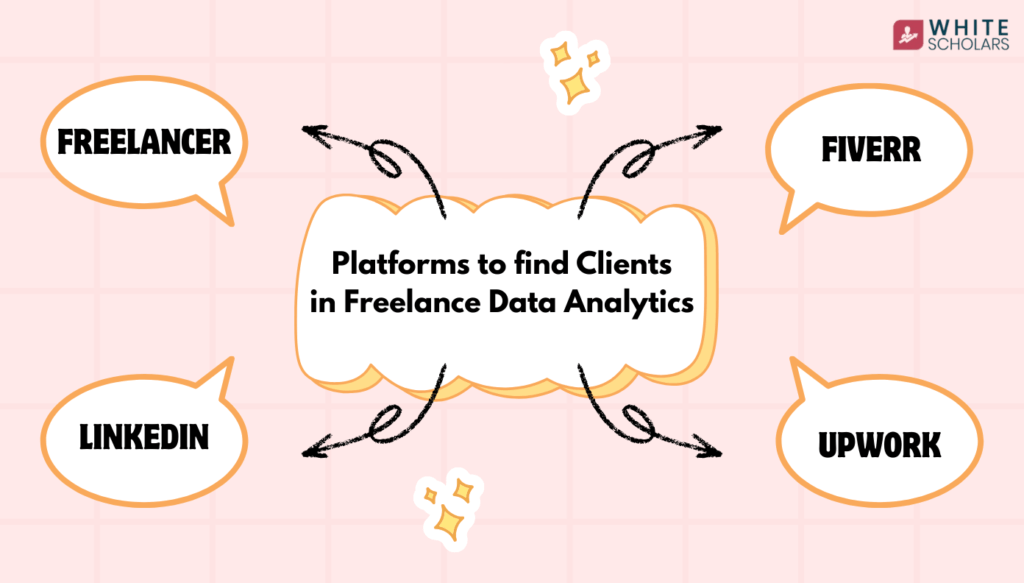
Finding clients is one of the initial steps that one needs to take when freelancing. There are a number of platforms that freelance data analysts can use to find work.
Some popular freelance platforms include:
- Upwork
- Fiverr
- Freelancer
- Toptal
Other ways that one can use include:
- Networking with professionals
- Sharing projects on LinkedIn
- Joining online communities
- Asking for referrals
Clients are normally looking for freelancers who have clear skills and experience.
Consistency and patience are key when one is just starting out.
Pricing and Contracts in Freelance Data Analytics
Pricing is a significant aspect of freelancing. It varies based on skills, experience, and project complexity.
Freelancers normally charge their clients in the following ways:
- Hourly rate
- Fixed project rate
- Monthly contract
New freelancers can charge lower rates at the beginning. As they gain experience, they can raise their rates.
Contracts are significant because they safeguard both the freelancer and the client.
A contract should contain the following:
- Project scope
- Payment terms
- Deadline
- Deliverables
Clear agreements prevent misunderstandings.
Managing Projects in Freelance Data Analytics
Project management is a crucial aspect of successful freelancing. Effective project management ensures that quality work is completed on time.
Best practices in project management are as follows:
- Understanding client needs clearly
- Setting practical deadlines
- Regular communication with clients
- Providing regular updates to clients
Freelancers need to manage their work efficiently as well.
Useful tools for this purpose are
- Trello
- Notion
- Google Sheets
- Microsoft Planner
Effective project management ensures higher client satisfaction and a greater likelihood of repeat business.
Industries Where Freelancer Data Analyst Opportunities Thrive
Freelance data analysts are required in many industries.
Some important industries include
E-commerce
- Sales analysis
- Customer behavior tracking
Healthcare
- Patient data analysis
- Performance reports
Finance
- Risk analysis
- Fraud detection
Marketing
- Campaign performance analysis
- Customer insights
Education
- Student performance tracking
Entertainment
- Content performance analysis
These industries create large amounts of data and need skilled analysts.
How to Stand Out in the Freelance Market
Competition exists in freelancing, so standing out is important.
Some effective ways include
- Building a strong portfolio
- Learning in-demand tools like Power BI and SQL
- Creating professional LinkedIn profile
- Communicating clearly with clients
- Delivering high-quality work
Freelancers who focus on quality and professionalism attract more clients.
Continuous learning also helps maintain competitiveness.
The Future Outlook for Freelance Data Analysts
The future for freelance data analysts appears to be very bright. As businesses continue to rely on data, the need for data analysts will continue to rise.
Some of the important trends that will emerge in the future are
- There will be a rise in the demand for remote data analysts
- There will be a rise in the demand for skills in dashboard and visualization
- There will be growth in the integration of AI and data analytics
- There will be an increase in freelance opportunities around the world
Companies will like to have flexible hiring options, which will lead to more freelance opportunities.
Freelancing leads to long-term growth and stability in one’s career.
Challenges Faced by Freelance Data Analysts
Freelancing has numerous advantages, but some difficulties are also encountered, particularly by new freelancers.
Finding the first client is one of the difficulties. It may take some time to gain the client’s trust, especially if they have no experience. But this problem can be overcome by creating a good portfolio and doing practice projects.
Other difficulties are
- Unstable income at the start
- Competition from other freelancers
- Handling multiple projects and their deadlines
- Effective communication with clients
Despite the difficulties, freelancing becomes simpler with experience. Many freelancers begin freelancing part-time and eventually switch to full-time freelancing.
Common Mistakes Beginners Should Avoid
Some errors can hinder the growth of freelancing. The following errors should be avoided:
- Failing to develop a robust portfolio
- Failing to develop effective communication skills
- Failing to set high rates from the start
- Failing to improve skills continually
A complete data analytics course in Hyderabad, Bangalore, or Mumbai can assist newbies in avoiding these errors and learning the right way to do things.
In Hyderabad especially, most people are learning to freelance after acquiring the right knowledge and experience in data analytics.
Income Potential of Freelance Data Analysts
Freelancing provides immense income potential based on skills and experience.
Newbie freelance data analysts can expect to earn:
- $200 to $500 per project
- $1000 to $3000 per month after gaining experience
- Experienced freelancers earn more than $5000 per month
Income is based on:
- Skill level
- Tool proficiency
- Type of clients
- Complexity of projects
Freelancers who work on data analytics dashboards, automation, and business reporting earn higher income.
Freelancing income potential increases at a faster rate than fixed jobs since there is no income cap.
Conclusion
Working alone as a data analyst brings solid income plus plenty of room to grow. Firms look for people who understand numbers and then turn them into clear answers. At first it might feel tough, yet each problem fades when skills build up over time through practice and the right software.
Excel, SQL, and Power BI these skills open doors when starting out on your own and are essential for freelancing success. With continuous learning and project experience, freelancing can become a stable and rewarding career.
FAQs
1. Can beginners start freelancing as data analysts?
Fresh starts happen when newcomers learn simple tools like Excel, SQL, or Power BI. Confidence grows through hands-on practice, piece by piece. Finished work adds up, turning into proof of skill.
2. How much can a freelance data analyst earn?
Fresh freelancers might pull in 200 to 500 bucks a job. Those who’ve been at it longer, especially sharp analysts, often see three thousand dollars monthly – sometimes way beyond that.
3. What tools are required for freelance data analytics?
Finding patterns hides inside spreadsheets, databases, dashboards, code, and web stats. Each piece shapes how numbers turn into pictures. Tools like these open doors where raw figures start telling stories.
4. Is freelancing better than a full-time job?
Working for yourself can mean more freedom plus a chance at earning extra money. Still, staying focused on your own is necessary along with always picking up new skills.