

Transition From BBA OR B.COM To Data Scientist In Just 4 Months

In just four months, you can go from BBA or B.Com to data scientist. More than 40% of beginners come from non-technical backgrounds. Learn Excel, SQL, Python, and real-world projects step by step.
Breaking the Boundaries of Commerce
Over the years, people who finished BBA or B.Com often headed into jobs like accounting, finance, banking, or managing teams. Yet those areas aren’t the only focus now; things have changed a lot lately.
Data science has recently emerged as a top choice for long-term career success. It creates opportunities where analytical abilities and business judgement come together.
The majority of business graduates experience difficulties after graduation. Constantly looking for low-paying or unfulfilling jobs.Here is the upside: you don’t have to master coding or be a numbers whiz to succeed in data science. Those with BBA or B.Com degrees can transition into this field in four months with the help of experts, step-by-step instruction, and practical exercises.
Why Data Science is the Career of the Future
By 2026, around 11 million jobs globally will need people who work with data. This rise isn’t just pulling in tech graduates, and others from different paths, like business studies, are stepping into these roles too. Job forecasts say openings in data science could jump 35% from 2022 to 2032, so it’s blowing up faster than most careers worldwide.
Salary Prospects
-
- Fresh grads in data science make anywhere from 4 to 7 LPA.
-
- Mid-tier workers might earn anywhere between 9 and 22 LPA, based on skill level or time in the field.
-
- Focusing on fields such as machine learning, business analytics, or artificial intelligence often leads to bigger paychecks. So choosing one might boost earnings. Instead of general roles, niche skills tend to pull in more cash since demand jumps when expertise is rare.
Obviously, data science brings steady work and also boosts income faster than most old-school business jobs.
Why Commerce Graduates Fit Perfectly into Data Science
Overlapping Skill Sets
Commerce graduates already have skills that are extremely relevant to data science.
-
- Analytical thinking from finance and accounting.
-
- Business understanding from management and economics.
-
- Decision-making skills from case studies and projects.
Data science thrives on the integration of business knowledge with technical tools. While engineers may excel at coding, commerce graduates bring a unique perspective by understanding markets, consumer behavior, and financial systems.
Complementary Knowledge
-
- Finance + Analytics: Predictive modelling for stock markets and risk analysis.
-
- Marketing + Data Science: Customer segmentation, campaign optimization.
-
- Management + Data Science: Strategic decision-making using dashboards and KPIs.
This makes commerce students ideal candidates for roles like business analysts, financial data scientists, and marketing analysts.
The Four-Month Transition Plan
Switching careers may sound daunting, but with the right roadmap, commerce graduates can become industry-ready data scientists in just four months.
Month 1: Building the Foundation
-
- Learn the fundamentals of data science, including statistics, probability, and data visualization.
-
- Get comfortable with tools like Excel, SQL, and Power BI.
-
- Understand how data is collected, cleaned, and prepared for analysis.
Month 2: Diving into Analytics
-
- Explore Python or R (don’t worry, basic coding is taught step by step).
-
- Take on small projects such as analyzing sales data or forecasting customer churn.
-
- Learn about data visualization libraries like Matplotlib and Seaborn.
Month 3: Applying Business Context
-
- Focus on business analytics and case studies relevant to commerce.
-
- Learn predictive modeling, regression, and classification techniques.
-
- Apply data science to finance, marketing, and operations problems.
Month 4: Hands-On Projects and Career Preparation
-
- Build a portfolio of projects (e.g., financial forecasting, customer segmentation).
-
- Practice mock interviews and communication skills.
-
- Learn how to present insights visually and narratively to stakeholders.
By the end of four months, students can confidently apply for roles such as data analyst, business analyst, junior data scientist, or financial analyst with data science expertise.
The Market Opportunity
Global Growth
The data science market is projected to grow from $155 billion in 2025 to $486 billion by 2029, at a CAGR of over 33%. This means that professionals entering the field today are positioning themselves at the forefront of a booming industry.
Rising Enrolments
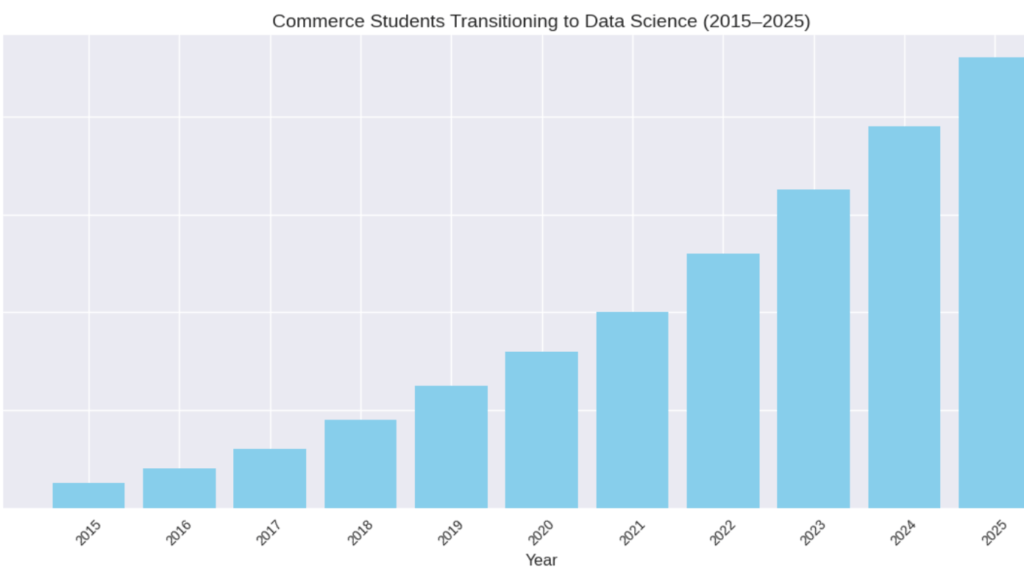
Educational institutions report a 20-30% increase in commerce students enrolling in data science programs. This trend reflects a growing awareness among graduates that traditional commerce roles are no longer the only option.
Industry Demand
Companies across sectors like finance, healthcare, retail, and technology are actively hiring professionals who can combine business knowledge with data-driven insights. Graduates in commerce with expertise in data science are in a unique position to close this gap.
Real-World Applications for Commerce Graduates
Finance and Accounting
-
- Fraud detection using machine learning.
-
- Predictive models for investment strategies.
-
- Automated financial reporting with dashboards.
Marketing and Sales
-
- Customer segmentation for targeted campaigns.
-
- Sentiment analysis of customer feedback.
-
- Sales forecasting using historical data.
Human Resources and Management
-
- Employee performance analytics.
-
- Predicting attrition rates.
-
- Optimising recruitment strategies with data.
These applications show how commerce graduates can leverage their existing knowledge while enhancing it with data science tools.
Overcoming Common Myths
Myth 1: Data Science is Only for Coders
Reality: While coding helps, many tools like Power BI, Tableau, and Excel allow non-programmers to perform advanced analytics.
Myth 2: Commerce Students Can’t Compete with Engineers
Reality: Commerce graduates bring business context and domain expertise, which engineers often lack. Together, they form powerful teams.
Myth 3: It Takes Years to Learn Data Science
Reality: With structured training, mentorship, and practice, a 4-month transition is achievable.
How to Get Started
Choose the Right Training Program
Look for courses that blend business analytics with technical skills. Ensure they offer hands-on projects and mentorship.
Build a Portfolio
Showcase projects relevant to commerce, such as financial forecasting or market analysis.
Network and Apply
Attend webinars, join LinkedIn groups, and connect with professionals in the field. Apply for internships or entry-level roles to gain practical exposure.
Hyderabad’s Ideal Data Science Training Course
WhiteScholars is a reputable data science training institute in Hyderabad that is especially well-known for helping students transition into technology careers.
Their structured curriculum begins with the fundamentals and progresses to advanced topics such as machine learning and data visualisation. With strong mentorship and hybrid learning, Through hands-on projects, students gain confidence and practical skills.
The institute also offers mock interviews and placement support, making learners industry-ready in just four months. Whether you’re from BBA or B.Com, WhiteScholars provides the right environment to grow, learn, and succeed in the fast-evolving field of data science.
Final Thoughts
The transition from BBA or B.Com to data science in just four months is not only possible but increasingly common. As industries evolve, the ability to combine business knowledge with analytical skills is becoming invaluable.
Commerce graduates no longer need to feel limited to traditional roles. By embracing data science, they can unlock opportunities in finance, marketing, management, and beyond while enjoying competitive salaries and global demand.
The journey requires commitment, but the rewards are immense. With the right training, mentorship, and mindset, you can transform your career trajectory and thrive in one of the most exciting fields of the 21st century.
Frequently Asked Question’s
1. Can I learn data science without a coding background?
A. Yes, you can. Many commerce students worry about coding, but the truth is you don’t need to be a programmer to start. Most beginner-friendly courses begin with Python, which is one of the simplest and most readable languages.
You will learn how to handle data using tools like NumPy and Pandas and gradually move into more advanced topics like machine learning. With consistent practice and guided projects, even someone with no prior tech experience can become confident in coding within a few weeks. The key is to follow a structured path and not rush the basics.
2. What skills do I need to become a data scientist?
A. To become a data scientist, you’ll need a mix of technical and analytical skills. These include Python programming, data analysis using Excel and SQL, statistics, and machine learning concepts. You will also use visualization tools such as Power BI or Tableau to present insights clearly.
Soft skills like communication, problem-solving, and business understanding are equally important, especially for commerce students who already have a strong grasp of business logic. Over 4 months, you can build these skills step-by-step through guided learning, practice problems, and real-world projects.
3. How does WhiteScholars help commerce students transition?
A. WhiteScholars is known for helping non-technical students, especially from BBA and B.Com backgrounds, make a smooth transition into data science.
Their training is designed to be beginner-friendly and highly structured. You’ll start with foundational topics and gradually move into hands-on projects that simulate real industry challenges. What sets them apart is their strong mentorship, hybrid learning model (online + offline), and regular communication sessions to build confidence.
They also conduct mock interviews and provide placement support, making sure you’re not just learning but also ready to face the job market.
4. Will I be able to get a job after 4 months of training?
A. Yes, it’s possible, especially if you follow a focused learning plan and build a strong portfolio. Many companies are now open to hiring candidates from non-tech backgrounds who show practical skills and a clear understanding of data.
Platforms like WhiteScholars support this journey by offering placement assistance, resume building, and interview preparation. If you complete real-world projects and communicate your journey well, you’ll stand out to recruiters.
5. What kind of projects will I work on?
A. You’ll work on projects that reflect real-world business problems, such as predicting sales, analysing customer behaviour, creating dashboards, and segmenting markets. These projects help you apply theory to practice and show recruiters that you understand how data works in real scenarios.
For example, you might use Python to clean messy data, apply machine learning to forecast trends, or create visual reports using Power BI. These hands-on experiences are crucial for building confidence and proving your skills, especially when transitioning from a commerce background.