

Will Graduates Succeed as Digital Marketers in 2026?
Graduating soon and unsure about your career path? Discover how to kickstart your journey as a digital marketer in 2026 with essential insights and guidance.
Can graduates learn digital marketing?
The year 2026 is a key time for job changes. If you’re a graduate thinking about a career in digital marketing this year, the answer is definitely ‘yes’. However, things have changed a lot. Digital marketing is not just about running simple ads or posting on social media anymore; it has been transformed by artificial intelligence (AI).
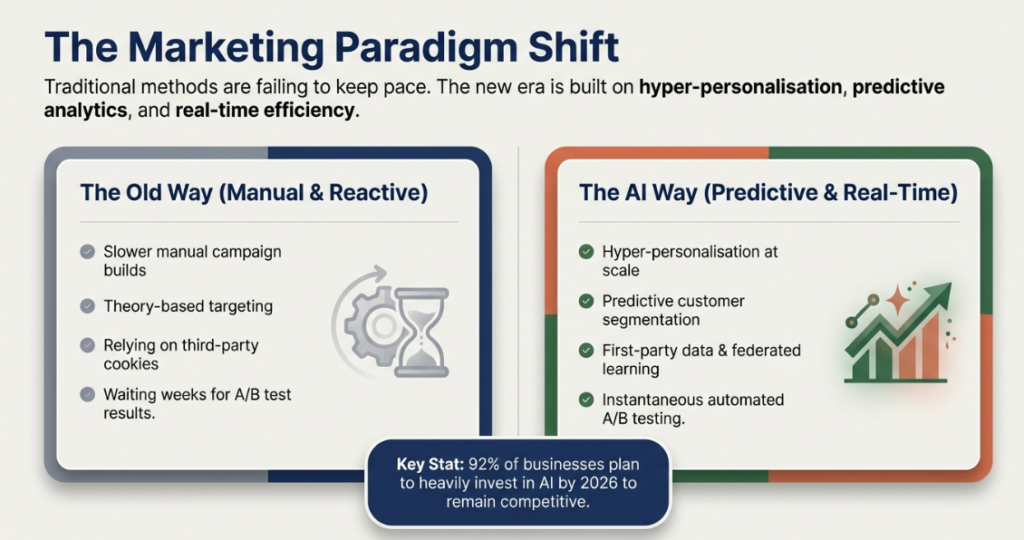
Now, AI controls how ads are made, how customers are targeted, and how results are improved in real-time. For graduates entering this field in 2026, the need for these skills is growing rapidly, and knowing how to use AI tools makes you much more valuable in the job market compared to those who stick to old methods.
How to learn Digital Marketing
To become a successful digital marketer in this AI-driven era, you must move beyond theory and focus on what actually works in real-world marketing teams and campaigns. Here is a comprehensive guide on what you need to master to thrive.
1. Master the AI Marketing Toolset
Success in 2026 requires hands-on proficiency with a new “stack” of essential tools. You should focus on:
- Content Generation: Use ChatGPT and Jasper to create everything from catchy social media posts to full-scale ad copy. These tools allow you to automate the content cycle, from keyword research to selecting a specific brand voice.
- Visual Design: Canva has integrated AI to allow marketers to create stunning graphics and video ads for Instagram, Facebook, and YouTube with minimal manual effort.
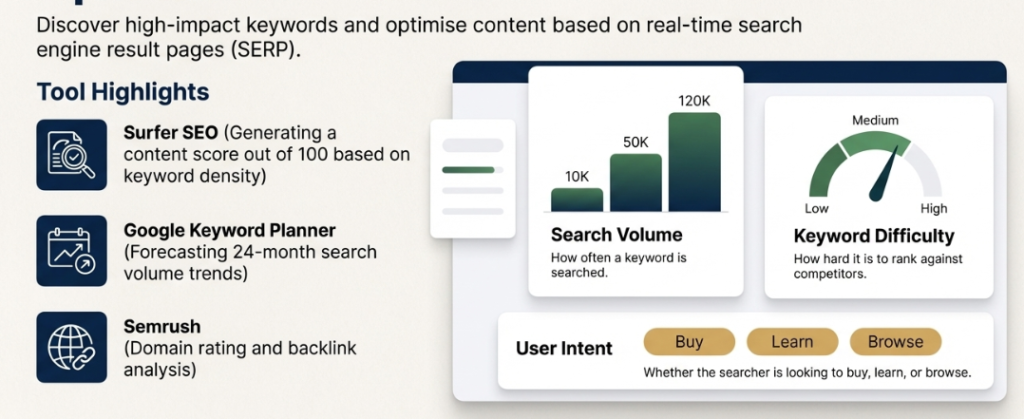
- SEO & Analytics: Tools like Surfer SEO, Semrush, and Google Analytics 4 (GA4) are non-negotiable for understanding customer journeys and ranking content.
- Email & SMS Automation: Mastering Mailchimp and Anyword.ai is essential for personalising subject lines and optimising send times based on when users are most likely to engage.
2. Understand Predictive Analytics and Segmentation
You must learn how to use AI to think and learn like a human to predict outcomes. Success involves using predictive analytics to analyse a customer’s browsing history and past purchases to determine who is most likely to buy a specific product.
For example, Amazon uses these engines to boost sales by 35% through personalised recommendations. As a marketer, your job is to use these data patterns to “hyper-personalise” the user experience, tracking real-time behaviour to tailor what a customer sees the moment they click.
3. Build AI-Powered Sales Funnels
A modern marketer must understand the “Top of the Funnel” (TOFU), “Middle of the Funnel” (MOFU), and “Bottom of the Funnel” (BOFU).
- TOFU: Attract leads through AI-generated content.
- MOFU: Nurture leads using AI-powered chatbots (like Tidio or HubSpot’s agents) that can qualify leads instantly without human intervention.
- BOFU: Close deals by using CRM tools like Zoho CRM or HubSpot to analyse behavioural data and personalise final messaging.
4. Pivot to Topical Authority and AEO
Traditional keyword stuffing is dead. In 2026, search engines prioritise topical authority. prioritise topical authority. This means instead of one-off posts, you must build topic clusters, multiple posts linked together that demonstrate deep expertise.
Furthermore, you must optimise for Answer Engine Optimisation (AEO) and Generative Engine Optimisation (GEO). This involves creating authoritative content that AI search engines can quickly recognise and retrieve to answer customer queries directly.
5. Prioritize Practical Experience and Metrics
To be successful, you must move from learning to doing. This involves:
- Hands-on Projects: Engage in real-world case studies, such as studying how Netflix uses AI to drive 75% of its content views through recommendation engines.
- Live Campaigns: Practice running actual campaigns using Google and Meta ad credits to see real results in real-time.
- Tracking Key Metrics: You must become obsessed with data. Track your Customer Acquisition Cost (CAC), Conversion Rate, Customer Lifetime Value (CLV), and Return on Investment (ROI).
In 2026, your value is measured by how effectively your AI strategies translate into profit.
6. Maintain Human Oversight
A common mistake is over-relying on AI. While AI can handle repetitive tasks like segmenting customers or sending emails, you must maintain creative control. AI-generated content still requires a human review to ensure the brand voice remains consistent and doesn’t sound “robotic” or generic.
Emerging Trends and Strategic Adjustments for 2026
As you build your career, you must stay ahead of several emerging trends that are defining the digital marketing landscape this year.
The Rise of Privacy-Preserving AI
With increasing concerns about data privacy and the decline of third-party cookies, successful marketers in 2026 are mastering privacy-preserving AI.
This involves shifting toward first-party data (data collected directly by the brand) and technologies like federated learning. This allows AI to predict behaviour and target the right customers while remaining compliant with strict privacy laws like GDPR.
Social Commerce 2.0
Social media is no longer just a place for discovery; it is a shopfront. Social Commerce 2.0 allows users to buy products directly within apps like Instagram without ever leaving.
Marketers must learn to use AI to personalise these in-app shopping experiences based on what users have liked or interacted with previously.
Generative Video Revolution
The advertising landscape has been transformed by AI video generation. By 2026, it is projected that 40% of all video ads will be AI-generated. Currently, 86% of advertisers are already using AI to create video content.
Graduates should familiarise themselves with tools like Pictory, Lumen5, and Runway.ai to animate images and create viral short-form video content effortlessly.
Conversational Marketing and Virtual Assistants
The future of customer interaction lies in conversational AI. AI chatbots are becoming more “human-like”, providing real-time support and intelligent recommendations across multiple platforms.
Marketers are now expected to manage these virtual assistants, such as Alexa, Siri, or custom brand bots, to engage customers through voice and text simultaneously.
Case Studies: Learning from the Leaders
To truly understand the power of AI in 2026, graduates should analyse these market leaders:
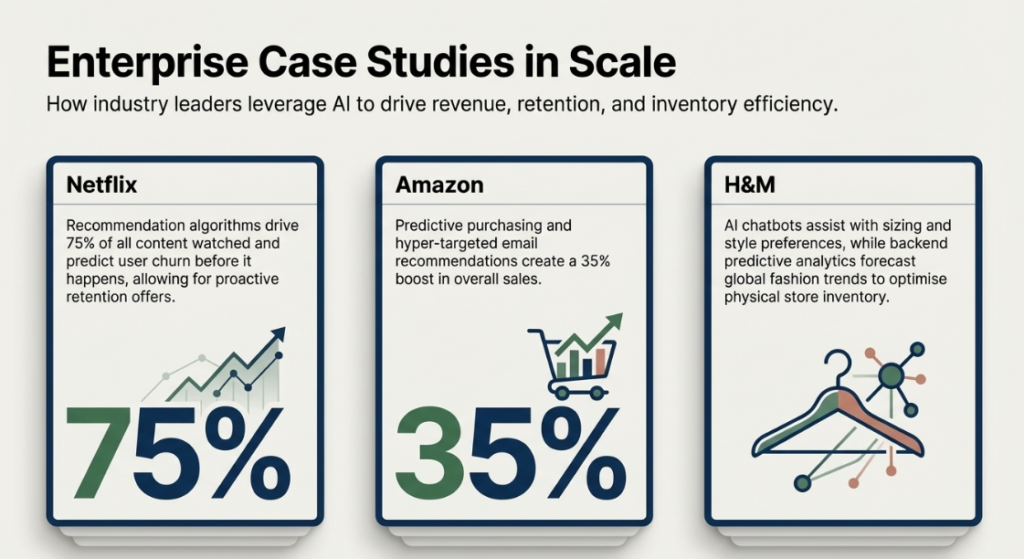
- Netflix uses AI not just for recommendations but also to predict loss of revenue, identifying users likely to cancel and offering them targeted discounts before they leave.
- Amazon: Leverages AI for “anticipatory shipping” and personalised email campaigns that suggest products based on real-time trending data.
- H&M: Employs AI to predict fashion trends and optimise inventory, ensuring they have the right styles in the right stores at the right time.
Strategic Checklist for Graduates
If you are starting today, follow this implementation checklist:
- Audit Your Data: Ensure any data you use is clean and follows GDPR regulations.
- Start Small: Test AI tools on low-risk tasks, such as generating email subject lines, before moving to full-scale campaign automation.
- Train Your AI: AI models are only as good as the data they receive. You must provide the right “prompts” and context to get high-quality results.
- Continuous Learning: Enroll in AI-powered certification programs such as WhiteScholars’ Digital Marketing course powered by AI in Hyderabad.
In conclusion, digital marketing in 2026 is a field of immense opportunity for any graduate who is willing to embrace the AI revolution.
By mastering the right tools, focusing on data-driven metrics, and staying agile as new trends like GEO and social commerce 2.0 emerge, you can gain a significant competitive edge and build a future-proof career.
Why SEO Experts need to learn AEO in 2026
Looking ahead to 2026, Answer Engine Optimisation (AEO) represents a significant shift in how digital content is created and ranked. Rather than focusing heavily on traditional keywords, AEO requires marketers to focus on creating content that directly answers customer queries.
The core goal of AEO is to produce information that artificial intelligence can quickly recognise as authoritative. This trend is emerging alongside Generative Engine Optimisation (GEO), as search engines and AI tools move towards providing immediate, direct answers to users instead of just a list of website links.
By embracing AEO, marketers ensure their content is structured in a way that AI “engines”, like those used in modern search and chatbots, can easily retrieve and present as the definitive answer to a user’s question.
How to perform AEO:
To perform Answer Engine Optimisation (AEO) effectively in 2026, you must shift your strategy from traditional keyword targeting to satisfying the logic of generative AI models. The specific steps include:
- Prioritise Direct Answers Over Keywords: Move away from simple keyword matching and focus on creating content that directly answers specific customer queries in a clear, concise manner.
- Establish Topical Authority: Instead of writing isolated blog posts, build topic clusters. This involves creating multiple, deeply interlinked posts about a specific subject. AI-powered search engines, such as ChatGPT, grant higher trust and rankings to websites that demonstrate this type of comprehensive “topical authority”.
- Format for AI Recognition: Structure your information so it is easily recognisable as authoritative by AI algorithms. This ensures that when an AI engine searches for a definitive answer, your content is the primary source it retrieves.
- Utilise AI Visibility Tools: Use modern tools like WriteSonic to specifically track and boost your brand’s visibility in AI search. These tools allow you to monitor your Generative Engine Optimisation (GEO) progress and see where AI platforms are mentioning your brand.
- Align Content with Search Intent: Use keyword research tools like Surfer SEO or Google Keyword Planner to determine if a user’s intent is to “buy”, “learn”, or “browse”. AEO success depends on your content providing the exact “answer” that matches that specific intent.
- Maintain Human Oversight: While AI helps generate and optimise the content, you must integrate human review to ensure the answers remain accurate and the brand voice stays consistent and non-robotic.
- Monitor Accuracy and Performance: Regularly audit your data and content to ensure it follows current regulations (like GDPR) and continues to provide high-quality responses that generative engines will prefer.
Final Thoughts
Digital marketing in 2026 is no longer about old methods, as AI has fundamentally changed how customers are targeted and results are optimised.
For graduates to succeed, they must move beyond theory and master a modern stack of AI tools like ChatGPT, Jasper, and Canva. Building topical authority through content clusters and optimising for Answer Engine Optimisation (AEO) will be essential for ranking in the generative search era.
While automation drives efficiency, maintaining human oversight remains critical to ensure the brand voice stays authentic and doesn’t become robotic.
Frequently Asked Questions
1. Is digital marketing still a viable career for graduates in 2026?
Yes, the demand is exploding because AI has transformed the field, and graduates with modern AI skills are now significantly more valuable in the job market.
2. Which AI tools are most important for a new marketer to learn?
Focus on mastering generative tools like ChatGPT and Jasper for text, Canva for visual design, and Surfer SEO or Semrush for search optimisation.
3. What is the difference between traditional SEO and AEO/GEO?
AEO and GEO focus less on keywords and more on creating authoritative content that directly answers customer queries so AI engines can quickly recognise and retrieve it.
4. What metrics are most important to track in an AI-powered strategy?
Success is measured by tracking Customer Acquisition Cost (CAC), Return on Investment (ROI), and Customer Lifetime Value (CLV) to ensure AI investments are paying off.
5. Can I automate my entire digital marketing workflow with AI?
While AI can automate repetitive tasks like segmenting customers or A/B testing, human oversight is necessary to prevent generic content and ensure compliance with privacy laws.