

Common Digital Marketing Mistakes to Avoid for Success
Discover the critical mistakes to avoid in digital marketing, from unverified learning to poor strategy, and how structured courses can accelerate your career.
The Comprehensive Guide to Avoiding Digital Marketing Failures
In the fast-paced world of digital marketing, the difference between a successful campaign and a costly failure is often small.
While many focus on what to do, it is equally important to understand what to avoid. Navigating this landscape requires a blend of strategic foresight, technical skill, and a commitment to quality.
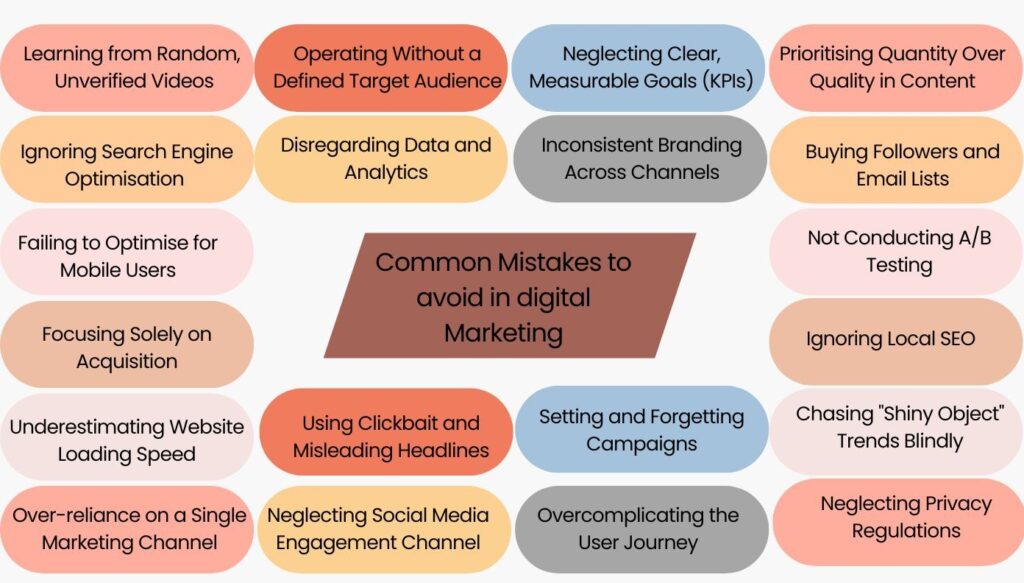
1. Learning from Random, Unverified Videos
One of the most common mistakes for beginners and even intermediate marketers is watching and learning from random videos on platforms like YouTube or social media.
While these platforms offer a wealth of information, the content is often fragmented, outdated, or lacks the necessary context to be applied effectively in a real-world business environment.
Following “hacks” or “quick tips” from unverified sources can lead to inconsistent results and a fundamental misunderstanding of marketing ecosystems.
Instead of relying on a patchwork of tutorials, enrol in structured courses like the WhiteScholars digital marketing course. A structured curriculum provides a logical progression of concepts, ensuring understanding of the “why” behind the “how”.
It offers professional mentorship, up-to-date industry standards, and a cohesive framework that allows learners to build a sustainable career rather than just executing isolated tasks.
2. Operating Without a Defined Target Audience
Many marketers make the mistake of trying to appeal to everyone. In digital marketing, if learners speak to everyone, they end up speaking to no one.
Avoiding the creation of detailed buyer personas is a recipe for wasted ad spend and low engagement. Learners must understand the demographics, psychographics, pain points, and online behaviours of your specific audience to tailor your messaging effectively.
3. Neglecting Clear, Measurable Goals (KPIs)
Running campaigns without Key Performance Indicators (KPIs) is like driving in the dark without headlights. You must avoid launching any marketing activity without defining what success looks like.
Whether it is lead generation, brand awareness, or conversion rates, having specific, measurable, achievable, relevant, and time-bound (SMART) goals is essential for evaluating performance and ROI.
4. Prioritising Quantity Over Quality in Content
In an era of “content is king”, many brands fall into the trap of churning out low-quality blog posts, videos, and social updates just to stay active.
Avoid sacrificing quality for frequency. Low-value content damages your brand authority and can lead to being penalised by search engine algorithms. One high-quality, authoritative piece of content is far more valuable than ten mediocre ones.
5. Ignoring Search Engine Optimisation (SEO) Fundamentals
Digital marketing is not just about paid ads. Avoiding SEO is a critical error that forces you to rely solely on increasing ad budgets for traffic.
Failing to optimise your website for technical SEO, keyword relevance, and backlink profiles means you are missing out on sustainable, long-term organic growth.
SEO should be integrated into your strategy from the beginning, not treated as an afterthought.
6. Failing to Optimise for Mobile Users
With the majority of web traffic now coming from mobile devices, ignoring the mobile experience is a fatal mistake.
If your website is slow to load, difficult to navigate, or has non-responsive design elements on a smartphone, you will lose a significant portion of your audience.
Google’s mobile-first indexing also means that poor mobile performance will directly hurt your search rankings.
7. Buying Followers and Email Lists
The temptation to “look big” often leads marketers to purchase social media followers or email lists. This behaviour should be avoided at all costs.
These lists are usually composed of bots or individuals who have no interest in your brand. Not only does this tank your engagement rates, but it also risks getting your accounts banned and your emails flagged as spam, destroying your sender reputation.
8. Disregarding Data and Analytics
Digital marketing is inherently data-driven. Avoiding your analytics dashboard means you are making decisions based on “gut feelings” rather than facts.
You must regularly review data from tools like Google Analytics or social media insights to understand which channels are performing and where your budget is being wasted. Ignoring the data prevents you from pivoting when a strategy is failing.
9. Inconsistent Branding Across Channels
Your brand should have a unified voice and visual identity. Avoiding consistency creates confusion and erodes trust.
If your LinkedIn tone is professional, but your Instagram is overly informal and uses different colours or logos, customers will struggle to recognise and connect with your brand. A cohesive brand identity across all touchpoints strengthens brand recall.
10. Focusing Solely on Acquisition, Not Retention
It is significantly more expensive to acquire a new customer than to keep an existing one. Avoiding a customer retention strategy is a major oversight.
Many marketers focus all their energy on the top of the funnel (awareness) and neglect the post-purchase experience. Implementing email marketing sequences, loyalty programmes, and excellent customer service is vital for long-term profitability.
11. Underestimating Website Loading Speed
In digital marketing, seconds matter. Ignoring your website’s load speed can lead to high bounce rates.
Users expect a site to load in under three seconds; any longer, and they will likely return to the search results to find a competitor. You should address technical debt and unoptimised images immediately.
12. Over-reliance on a Single Marketing Channel
Relying exclusively on Facebook Ads or SEO is a risky strategy. Avoiding diversification leaves your business vulnerable to algorithm changes or platform policy updates.
If your primary channel disappears or becomes too expensive overnight, your business could collapse. A balanced mix of organic, paid, and owned media (like an email list) provides stability.
13. Using Clickbait and Misleading Headlines
While high click-through rates (CTR) are desirable, avoiding clickbait that doesn’t deliver on its promise is essential for brand integrity.
If a user clicks an ad or a link and feels deceived by the content that follows, they will immediately leave and develop a negative association with your brand. Always ensure your headlines accurately reflect the value provided in the content.
14. Neglecting Social Media Engagement
Social media is meant to be social. Avoiding two-way communication, such as failing to respond to comments, messages, or mentions, makes your brand seem robotic and uncaring. Building a community requires active participation.
Engagement is a key signal for social media algorithms and helps boost the organic reach of your posts.
15. Not Conducting A/B Testing
It is a mistake to believe that the best ad copy or landing page design is already known. Avoiding A/B testing (split testing) limits the ability to optimise.
By testing different headlines, call-to-action (CTA) buttons, and imagery, you can let the audience’s behaviour dictate the most effective elements of your campaign, leading to better conversion rates over time.
16. Ignoring Local SEO (For Physical Businesses)
For businesses with a physical location or those serving a specific geographic area, avoiding local SEO is a missed opportunity.
Failing to claim your Google Business Profile or not targeting local keywords means local customers will find your competitors instead. Local search intent is often very high, making it a critical area for conversion.
17. Setting and Forgetting Campaigns
Learners cannot ignore digital marketing once they set it up. Avoiding regular monitoring and adjustment of your campaigns can lead to “ad fatigue”, where your audience stops noticing your ads because they have seen them too many times.
Continuous optimisation is required to maintain performance and keep your messaging fresh.
18. Overcomplicating the User Journey
A complicated path to purchase will kill your conversion rate. Avoiding a complex checkout or sign-up process is vital.
Every extra click or form field is an opportunity for a potential customer to drop off. Streamline your user journey to be as frictionless as possible, guiding the user clearly toward the desired action.
19. Neglecting Privacy Regulations (GDPR/CCPA)
With increasing focus on data privacy, avoiding legal compliance is not just unethical but dangerous for your business.
Neglecting to provide clear opt-ins for data collection or lacking a transparent privacy policy can result in significant fines and a decline in consumer trust. It is essential to stay informed about the regulations in the regions of operation.
20. Chasing “Shiny Object” Trends Blindly
The digital marketing world is full of trends, AI, the metaverse, new social platforms, etc. Avoiding the trap of chasing every new trend without a strategic reason is important.
While staying current is good, jumping into every new platform can distract learners from the core strategies that are already working. Only adopt new technologies or platforms if they align with your business goals and where your audience actually spends time.
Conclusion
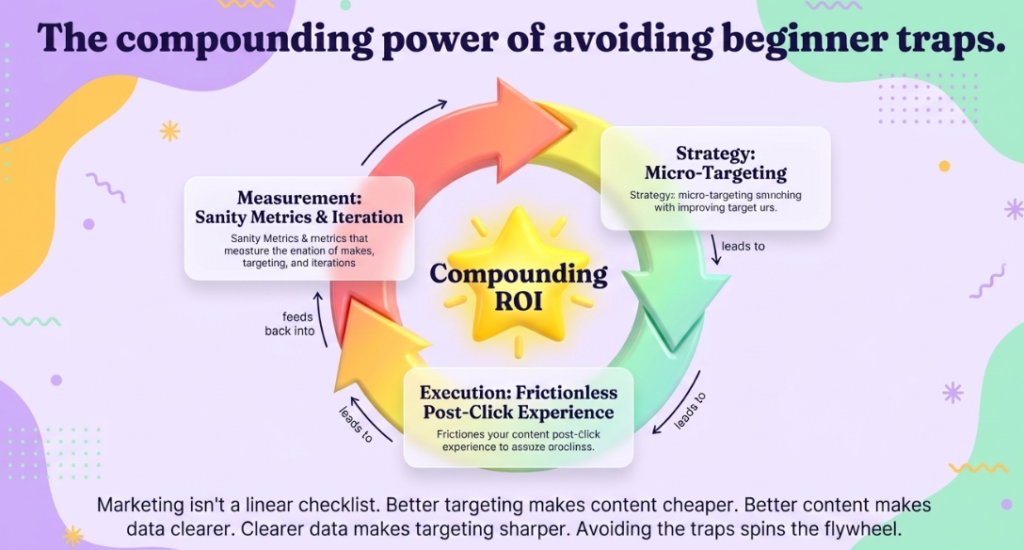
Success in digital marketing is as much about discipline and avoiding errors as it is about creativity.
By moving away from unverified learning and embracing structured education like the WhiteScholars digital marketing course powered by AI , learners lay a foundation of expertise that helps them navigate these twenty common pitfalls.
Focus on your audience, respect your data, and always prioritise quality over shortcuts. This long-term approach will ensure your marketing efforts yield sustainable growth and a high return on investment.
Frequently Asked Questions
Why is relying on random online tutorials considered a major mistake?
Random videos often provide outdated or fragmented information that lacks the context needed for professional application.
Enrolling in a structured course, such as the WhiteScholars program, is recommended because it provides a cohesive framework, professional mentorship, and up-to-date industry standards.
What are the risks of marketing without a defined target audience?
Attempting to appeal to everyone usually results in diluted messaging that fails to resonate with any specific group, leading to wasted advertising spend. Developing detailed buyer personas is essential to ensure that your marketing efforts are tailored to the specific demographics and pain points of your ideal customers.
How does neglecting SEO impact a digital marketing strategy?
Avoiding SEO fundamentals forces a brand to rely entirely on expensive paid advertising for traffic, which is unsustainable in the long term. Proper SEO builds organic authority and visibility, providing a foundation for sustainable growth that does not require a continuous ad budget to maintain.
Why should brands avoid purchasing followers or email lists?
Purchased lists are typically composed of bots or uninterested users, which tanks engagement rates and damages your sender reputation. This practice risks account bans and ensures that your marketing data is skewed by fake interactions, making it impossible to measure genuine business growth.
What is the consequence of failing to optimise for mobile users?
Since the majority of web traffic is mobile, a non-responsive website leads to high bounce rates and lost conversions. Additionally, search engines use mobile-first indexing, meaning poor mobile performance will directly result in lower search rankings and reduced organic discoverability.
